
Ask most people what testosterone does, and they will describe a male hormone – muscle, aggression, sex drive. Ask an endocrinologist, and you will get a different answer: for most of a woman’s adult life, testosterone circulates in higher concentrations than estrogen. It is not a male hormone that occasionally shows up in women. It is one of the primary hormones of the female body, and it has been left out of the conversation for decades.
This gap shows up constantly in clinical practice. Women are told their fatigue is stress, their low libido is a relationship issue, their loss of muscle tone is just aging. Sometimes that is true. But sometimes the missing piece is a hormone almost nobody thinks to test.
This article lays out what testosterone actually does in the female body, what the strongest available evidence supports (and does not support), what changes at menopause and why timing matters more than most people realize, and how bioidentical hormone therapy fits into a responsible, evidence-based treatment plan.
What Testosterone Actually Does in the Female Body
Testosterone in women is produced by the ovaries and adrenal glands and plays a role well beyond libido, including:
- Energy and vitality – testosterone contributes to overall drive and stamina
- Mood regulation – androgen receptors are present throughout brain tissue involved in mood and motivation
- Muscle mass and body composition – testosterone supports lean muscle maintenance and influences how fat is distributed
- Bone density – androgens contribute to skeletal health alongside estrogen
- Cognitive clarity – many women describe “brain fog” during periods of hormonal decline, and androgen receptors are present in regions of the brain tied to memory and focus
- Sexual desire and arousal – the most well-studied and best-supported role of testosterone in women
The point is not that testosterone explains everything. It is that it explains more than the current conversation gives it credit for, and dismissing it outright is just as unscientific as over-prescribing it.
Where It’s Produced, and Why It Declines
Unlike men, whose testosterone comes primarily from the testes, women produce testosterone from two sources: the ovaries and the adrenal glands. This dual production means the decline is more gradual than most people assume.
Testosterone levels in women do not wait for menopause to fall. They begin declining in a woman’s 20s and 30s, well before any menstrual changes appear. This is one of the most under-communicated facts in women’s hormone health – by the time a woman reaches her 40s, she may have already lost a significant portion of her peak testosterone output, with no clear external marker to explain why she feels different.
The decline is sharper and more sudden in specific circumstances, particularly surgical menopause (removal of the ovaries), where testosterone production drops abruptly rather than gradually. This distinction matters clinically: a 45-year-old who had her ovaries removed is in a very different hormonal position than a 45-year-old who is still cycling normally, even if both report similar symptoms.
Menopause and the Timing Window
Menopause is where the testosterone conversation intersects with a much bigger, and frequently misunderstood, topic: hormone replacement therapy (HRT) timing.
For years, HRT carried a reputation for being risky, largely due to early interpretations of the Women’s Health Initiative (WHI) study published in 2002. That study found increased cardiovascular risk in women taking hormone therapy, and the finding spread quickly – HRT was recast almost overnight as dangerous. What rarely made it into the public conversation was a critical detail: the average woman in that study was over age 63 and often more than a decade past menopause when she started therapy.
Subsequent research revisited this data and identified what is now called the “timing hypothesis” or “window of opportunity.” The finding, replicated across multiple studies including reanalysis of the WHI data and later trials such as KEEPS and ELITE, is consistent: women who start hormone therapy within about 10 years of their final menstrual period, or before age 60, tend to see a favorable risk profile, including reduced cardiovascular risk. Women who start hormone therapy a decade or more after menopause do not get the same protective effect, and may face higher cardiovascular and stroke risk instead. One meta-analysis found hormone therapy reduced coronary heart disease risk by roughly a third in women within 10 years of menopause, with no such benefit in women starting later.
In practical terms: it is not simply whether a woman uses hormone therapy that determines her risk profile, but when she starts, relative to her final period. This is precisely why a comprehensive hormone evaluation – not guesswork, and not a one-size-fits-all protocol – matters so much. The right decision for a 52-year-old three years past menopause is not the same as the right decision for a 68-year-old fifteen years past it. Neither of those women should be told the same generic thing about hormone therapy, and neither should assume the internet’s blanket “for” or “against” narrative applies to her specific timeline.
Signs and Symptoms – and the Honesty Caveat
Women with low testosterone commonly report:
- Persistent fatigue not explained by sleep or workload
- Reduced sexual desire or arousal
- Loss of muscle tone despite consistent exercise
- Low mood or flattened motivation
- Difficulty concentrating or mental fog
Here is the part most content on this topic leaves out: every single one of these symptoms overlaps heavily with thyroid dysfunction, iron deficiency, elevated cortisol, depression, and sleep disorders. Symptoms alone are never sufficient to diagnose low testosterone, and any clinic that offers to treat you based on a symptom checklist without lab work is not practicing responsible medicine. A proper evaluation looks at the full picture, not a single hormone in isolation.
What the Evidence Actually Supports
This is the section where most content on the internet gets vague, overpromises, or simply repeats marketing claims. Here is what the strongest available clinical evidence actually shows.
In 2019, eleven international medical societies – including the Endocrine Society, the International Menopause Society, and the North American Menopause Society – released a Global Consensus Position Statement on the Use of Testosterone Therapy for Women, based on a systematic review and meta-analysis of randomized controlled trials. The conclusions were specific:
- Evidence robustly supports testosterone therapy for one specific indication: Hypoactive Sexual Desire Disorder/Dysfunction (HSDD) in postmenopausal women.
- Evidence does not currently support testosterone therapy for other commonly claimed benefits – energy, mood, cognitive function, or general wellbeing – despite these being common reasons it is prescribed off-label.
- No blood test cutoff has been established that reliably distinguishes women with low testosterone from women without it.
This is an important and uncomfortable distinction. Testosterone therapy for women is genuinely well-supported for one specific problem, and genuinely under-studied for many others it is often marketed toward. A responsible clinic tells you both halves of that sentence.
Bioidentical Hormones, Honestly Explained
“Bioidentical” is one of the most misunderstood and most marketed terms in hormone health, so it is worth being precise about what it actually means.
Bioidentical simply means a hormone that is molecularly identical to the one your body naturally produces, as opposed to a synthetic analog with a different structure. That is it. It says nothing about whether a specific product is regulated, tested, dosed accurately, or safe. This distinction matters because there are two very different categories of bioidentical hormones:
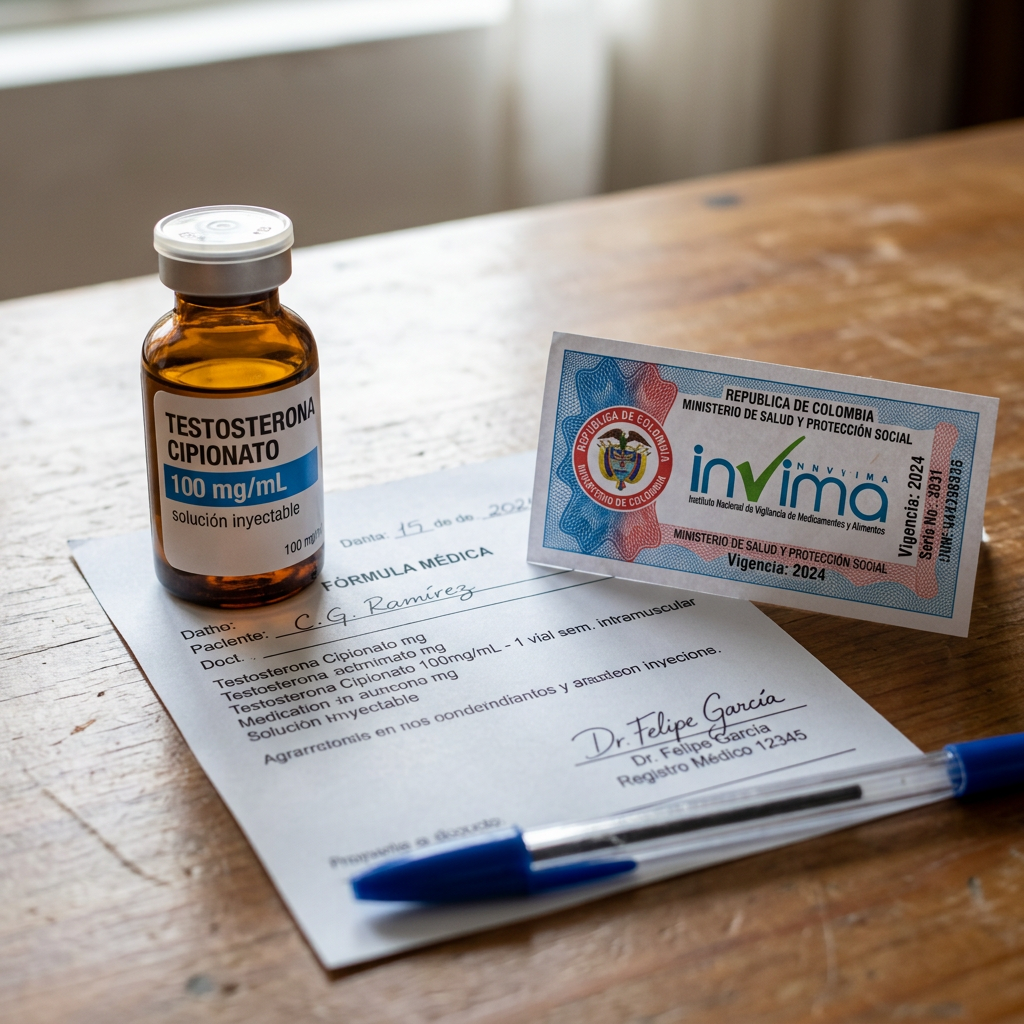
- Regulated, approved bioidentical formulations – manufactured under pharmaceutical quality standards, with consistent dosing verified through regulatory review (in the United States, FDA-approved; in Colombia, products carry INVIMA sanitary registration). Estradiol and micronized progesterone are common examples.
- Custom-compounded “bioidentical” preparations – mixed by compounding pharmacies to a specific prescription, without the same manufacturing oversight or large-scale safety data.
Medical bodies including the North American Menopause Society, the Endocrine Society, and a 2020 review by the U.S. National Academies of Sciences, Engineering, and Medicine have all reached a similar conclusion: there is little or no rigorous evidence that compounded bioidentical formulations are safer or more effective than regulated, approved ones, and compounded products carry documented risks around inconsistent dosing and quality control. One retrospective study comparing outcomes found bothersome side effects were reported by more than half of women using compounded testosterone/estradiol pellets, compared with roughly 15 percent of women using regulated, approved formulations.
None of this means bioidentical hormone therapy is something to avoid. It means the meaningful safety question is not “is it bioidentical,” but “is it manufactured and dosed under proper regulatory oversight.” That is the distinction we build our approach around: hormones that match your body’s own chemistry, sourced and dosed through channels with real quality oversight, not through unregulated custom mixing sold on the promise of the word “natural.”
Why Testing and Diagnosis in Women Is Harder Than in Men
Diagnosing low testosterone in men is relatively straightforward: there are established reference ranges, and a below-range result paired with symptoms supports a diagnosis. In women, it is genuinely more complicated. Testosterone circulates at much lower concentrations in women, and many standard lab assays were originally calibrated for the male range, making them less accurate at the lower concentrations typical in women. Combined with the lack of an agreed diagnostic cutoff, this is why self-diagnosing “low testosterone” from a symptom list (increasingly common advice on social media) is unreliable, and why an evaluation needs to look at testosterone in the context of a full hormone and metabolic panel, not as a single isolated number.
What Responsible Treatment Looks Like
At TRT Optima, evaluating a woman’s hormonal health starts with a full picture, not a single hormone or a symptom checklist. Our process includes:
- Comprehensive lab work covering sex hormones, thyroid function, and relevant metabolic markers – not testosterone in isolation
- Physician review of your full history and lab results before any treatment is discussed
- Treatment only when the clinical picture actually supports it, with a clear explanation when it does not
- Ongoing monitoring and follow-up labs for anyone who begins therapy
This is also where testosterone often intersects with broader concerns we see regularly, including weight and metabolic health and general hormonal balance addressed through our hormone replacement therapy program. You can read more about how we approach every evaluation on our process page.
The Bottom Line
Testosterone is not a footnote in women’s health. It is a hormone with real, evidence-backed effects on sexual health, and a hormone still being actively studied for its broader role in energy, mood, and cognition. The honest answer, for now, sits between the extremes: not a cure-all, and not irrelevant. What actually matters is a proper evaluation, based on your labs and your history, not a symptom list or a marketing claim.
If you want clarity on where you stand, the first step is a comprehensive evaluation, not a guess. Schedule a hormone evaluation with TRT Optima – you only pay for lab testing, and the initial medical review is free.
Sources
- Davis SR, Baber R, Panay N, et al. Global Consensus Position Statement on the Use of Testosterone Therapy for Women. Journal of Clinical Endocrinology & Metabolism. 2019;104(10):4660-4666.
- Manson JE, et al. The Timing Hypothesis: Hormone Therapy for Treating Symptomatic Women During Menopause and Its Relationship to Cardiovascular Disease. Reviewed in various clinical publications on WHI reanalysis, KEEPS, and ELITE trial data.
- North American Menopause Society. The 2022 Hormone Therapy Position Statement of The North American Menopause Society. Menopause. 2022.
- National Academies of Sciences, Engineering, and Medicine. The Clinical Utility of Compounded Bioidentical Hormone Therapy. 2020.
- Endocrine Society Position Statement on Compounded Bioidentical Hormone Therapy. 2019.