Is Testosterone Legal in Colombia? The Definitive 2026 Legal Guide
This is TRT Optima's single source of truth on the legal status of testosterone in Colombia as of June 2026.
Quick answer
Prescription rules, INVIMA, pharmacy access, importing and travelling with testosterone: what Colombian law allows in 2026, explained plainly.
This is TRT Optima's single source of truth on the legal status of testosterone in Colombia as of June 2026.
Whether you are a Colombian resident, a foreign expat, a medical tourist, or simply someone doing their research before starting a TRT protocol, this article answers every legal question thoroughly and accurately, including the critical connection to INTERPOL's global Operation Pangea, which directly affects anyone buying testosterone outside legitimate medical channels.
1. The Short Answer: Yes, With a Prescription
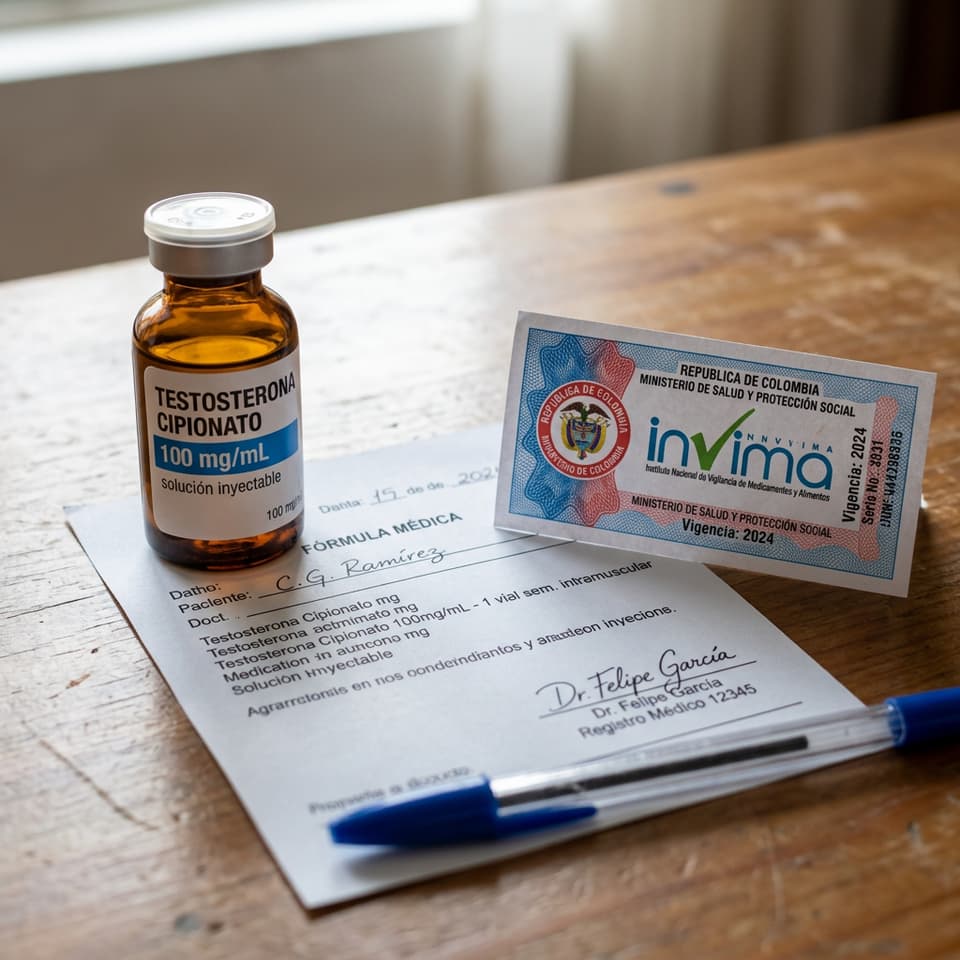
Testosterone is legal in Colombia. Specifically, it is a prescription-only medication regulated by Colombia's national pharmaceutical authority, INVIMA (Instituto Nacional de Vigilancia de Medicamentos y Alimentos). That means any adult who obtains a valid fórmula médica (medical prescription) from a licensed Colombian physician can legally possess, use, and purchase testosterone at any authorized pharmacy in the country.
Critically, testosterone is not a controlled substance in Colombia. It does not appear on Ministry of Health Resolution 1478 of 2006, which defines medications subject to special narcotic-level controls. It is not classified alongside heroin, cocaine, or methamphetamine under Law 30 of 1986, Colombia's primary drug statute, a law that governs narcotics and psychoactive substances, not hormone medications. Testosterone sits in the same legal category as antibiotics or blood pressure drugs: available to anyone who needs it medically, under appropriate physician oversight.
This legal framework makes Colombia substantially more accessible than the United States (where testosterone is a Schedule III controlled substance), the United Kingdom (Class C), or Australia (Schedule 4). The Colombian system recognizes that hormonal deficiency is a medical condition requiring treatment, and it does not erect bureaucratic barriers between a confirmed diagnosis and care. For a full introduction to what testosterone replacement therapy involves and who qualifies, see our complete guide to TRT in Colombia.
But here is the important nuance that most articles leave out: access being legal doesn't mean access being good. Getting a prescription in Colombia is achievable. Getting a prescription from a physician who actually understands hormone therapy, who orders the right panel, interprets results against optimal rather than just "normal" ranges, and monitors you properly over time, is considerably rarer. That gap between legal access and quality care is exactly what TRT Optima was built to close.
2. How Colombia Classifies Testosterone Under Pharmaceutical Law
Colombia's pharmaceutical regulatory framework is built on Decree 677 of 1995, issued by the Ministry of Health. This decree established the foundational rules for pharmaceutical products, their registration, manufacturing, import, export, packaging, labeling, advertising, and surveillance. Under this framework, all medications sold in Colombia must receive a registro sanitario (health registration) from INVIMA before they can be marketed, dispensed, or used in clinical settings. Testosterone preparations that have received this registration are fully legal pharmaceutical products.
The controlled substances regime in Colombia operates as a separate, parallel framework. Ministry of Health Resolution 1478 of 2006 defines "medications subject to special control," those requiring additional oversight beyond a standard prescription due to abuse potential, dependence risk, or public health concerns. These are drugs like opioids, benzodiazepines, and certain stimulants. Testosterone is not listed. It has never appeared on this list. The Colombian government has consistently treated testosterone as a prescription-only pharmaceutical rather than a substance requiring narcotic-level controls.
Law 30 of 1986, Colombia's foundational narcotics statute, governs true controlled substances: cocaine, heroin, cannabis, and similar compounds. Hormone medications, including testosterone, are entirely outside the scope of this law. Someone found with prescription testosterone is not treated the same as someone found with cocaine, the legal frameworks are completely separate.
For context on how this differs globally: in the United States, testosterone was added to the Controlled Substances Act in 1990 as a Schedule III substance, largely as a response to steroid abuse in professional sports, a political decision, not a pharmacological one. The UK classifies it as Class C under the Misuse of Drugs Act. Australia lists testosterone as Schedule 4 (prescription only) but with strict importation controls. Colombia's approach is arguably more coherent: it treats testosterone as what it actually is, a hormone that humans produce naturally, which sometimes requires medical supplementation, rather than conflating legitimate TRT with illicit doping. Testosterone deficiency affects a meaningful share of the male population, with prevalence rising sharply with age and with conditions like obesity, diabetes, and hypertension, research places the rate at roughly 30% of men aged 40 to 79, a public health reality that Colombia's framework takes seriously.
INVIMA is the governmental body that actually enforces these rules. Often described as Colombia's equivalent of the US FDA, INVIMA maintains the registry of approved pharmaceutical products, inspects manufacturers and pharmacies, and operates a national pharmacovigilance system. A testosterone product with INVIMA approval has been reviewed for quality, safety, and efficacy, it is a legitimate, vetted medication. The INVIMA website at invima.gov.co maintains a publicly searchable registry of all registered products.
3. What Is Legal vs. What Is Not
Understanding the legal framework requires a clear-eyed view of where the line falls. Here is exactly what the law permits and what it prohibits:
What Is Legal
- Possessing testosterone with a valid prescription. A physician-issued fórmula médica is your legal authorization. Keep it with your medication.
- Purchasing testosterone at any licensed Colombian pharmacy. Major national chains, Farmatodo, Cruz Verde, Droguería La Rebaja, all carry INVIMA-registered testosterone products. Your prescription is honored at any of them.
- Receiving a testosterone prescription from a licensed Colombian physician. Any licensed Colombian doctor who has reviewed your labs and determined that TRT is clinically appropriate may write a legal prescription.
- Bringing a personal supply of testosterone into Colombia through customs. Travelers and expats may carry a reasonable personal-use quantity of prescription medication when accompanied by documentation, typically the original prescription, pharmacy receipt, and ideally a physician letter confirming active treatment. The standard personal-use threshold recognized internationally is a 90-day supply.
- Continuing TRT as a foreign resident once established with a local physician. Expats and long-term residents can fully integrate TRT into their healthcare routine in Colombia through private medical channels.
What Is Not Legal
- Purchasing testosterone without a prescription. Any pharmacist who dispenses prescription testosterone without a valid fórmula médica is violating Colombian pharmaceutical law. Any buyer accepting that dispensing is equally non-compliant. INVIMA conducts pharmacy inspections and compliance enforcement.
- Self-prescribing. Diagnosing yourself with hypogonadism and ordering testosterone online or purchasing it from a gym contact is illegal regardless of your actual hormone levels. A licensed physician must evaluate you and issue a valid prescription.
- Importing bulk quantities without proper authorization. Personal-use amounts with prescription documentation are generally fine. Large consignments, dozens of vials, kilograms of raw materials, will attract customs scrutiny and potential seizure. This is especially relevant in the context of Operation Pangea operations (see Section 9).
- Purchasing from underground laboratories or black-market sources. These products are not INVIMA-registered, have no quality controls, and their sale is illegal.
- Selling or distributing testosterone without a pharmaceutical license. Redistribution, even giving medication to a friend, is illegal without proper pharmacy and distribution licensing.
If you are uncertain whether your current situation is fully compliant, the practical solution is straightforward: get a legitimate prescription from a licensed Colombian physician who understands hormone therapy. The process is outlined below, and it is nowhere near as simple as it may appear on the surface. Learn more about how proper medical oversight keeps TRT safe by addressing side effects before they develop in our guide to TRT side effects: separating facts from fear.
4. The Prescription Process in Colombia, and Why Getting It Right Is Harder Than It Looks
Here is something most online guides won't tell you: in Colombia, getting a testosterone prescription is easy. Getting a good testosterone prescription, one that is based on a comprehensive panel, interpreted correctly, and backed by proper ongoing monitoring, is genuinely difficult.
The pathway looks simple on paper. See a doctor. Get blood work. Get a prescription. But the reality for most patients who walk into a general practice clinic or a family doctor's office is quite different. Understanding why is essential before you decide how to approach your own care.
The Problem With General Practitioners and Hormone Therapy
The majority of Colombia's general practitioners, the doctors you will most easily reach through walk-in clinics, EPS networks, or general private practices, simply are not trained in hormone optimization. They understand that testosterone is a medication, and some will write a prescription if you present with obvious symptoms and clearly low numbers. But the quality of care involved in getting to that prescription is often inadequate in ways that matter significantly.
Common problems patients encounter with non-specialized physicians include:
- Incomplete panels. The most common mistake is ordering only total testosterone, a single number that captures only part of the picture. Without free testosterone, SHBG, estradiol, LH, FSH, hematocrit, PSA, and a metabolic panel, you cannot make an informed clinical decision. A patient with normal total testosterone but severely suppressed free testosterone and elevated SHBG may be profoundly symptomatic, and a single total T number will miss it entirely.
- Outdated reference ranges. Many Colombian labs report testosterone results against ranges derived from large population averages, ranges like 264-916 ng/dL that include men who are clinically symptomatic but technically "normal." A physician using these ranges as the sole benchmark may tell a patient with 300 ng/dL and every symptom of hypogonadism that his levels are "fine."
- Prescribing without monitoring. A prescription is the beginning of TRT, not the end. Testosterone therapy changes your body's hormonal balance, and without follow-up blood work every 3-6 months, problems develop silently. Elevated hematocrit, estradiol imbalance, rising PSA, deteriorating lipid profile, these are all manageable when caught early, and potentially serious when they are not caught at all.
- No estradiol management. Many non-specialist prescribers either don't measure estradiol at all or don't know how to act on the result. Estradiol management is one of the most nuanced and important aspects of TRT, it directly affects mood, libido, joint health, and cardiovascular markers. Ignoring it is not a minor oversight.
- Cookie-cutter protocols. A physician who treats TRT as a checkbox, same dose for every patient, no adjustment based on response, no optimization over time, will produce mediocre results at best. TRT is not a static prescription. It requires titration, follow-up, and clinical judgment.
The Endocrine Society's 2018 Clinical Practice Guidelines require confirming low testosterone with at least two separate morning blood draws before diagnosis, followed by a full evaluation of secondary causes, symptom correlation, and individual patient context. Most general practitioners in Colombia are not following this standard, not because they are bad doctors, but because hormone therapy is a specialty within a specialty, and most generalists simply haven't been trained in it. For a deep explanation of what each lab marker means and why it matters, see our complete guide to TRT blood work.
What Proper TRT Care Actually Looks Like
Done correctly, the TRT prescription process in Colombia follows five clear steps, but each step has quality standards that non-specialized physicians frequently miss:
Step 1, Comprehensive Blood Work: a full hormone and metabolic panel. Not just total testosterone. Free testosterone, estradiol (E2), SHBG, LH, FSH, prolactin, DHEA-S, IGF-1, full lipid panel, liver and kidney function, hemoglobin A1C, thyroid panel (TSH, fT3, fT4), CBC/hematology, PSA, and fasting glucose and insulin. This is the panel TRT Optima uses as standard. At most Colombian general practices, you will not be ordered this panel.
Step 2, Physician Consultation With Hormone Expertise: a physician who reviews your complete results in clinical context, not just flags a number outside the lab reference range, but understands optimal versus merely "normal," evaluates your symptom picture, rules out secondary causes, and discusses realistic expectations. This is a fundamentally different consultation from a GP who glances at your results and decides whether to prescribe based on a single data point.
Step 3, Prescription When Clinically Justified: if TRT is appropriate, your physician issues a Colombian fórmula médica. No mandatory waiting period, no insurance pre-authorization. But equally important: a responsible physician will also tell you when TRT is not appropriate, and what to do instead. Checking whether your levels are clinically low is essential, our guide to normal testosterone levels by age gives you the reference framework.
Step 4, Fill at a Licensed Pharmacy: you take the prescription to any licensed pharmacy and purchase your medication directly. No compounding pharmacy requirement, no insurance approval, no clinic markup. TRT Optima can direct patients to pharmacy partners where INVIMA-registered testosterone products are consistently in stock. See our pricing page for full transparency on end-to-end costs.
Step 5, Ongoing Monitoring: follow-up blood work every 3-6 months tracking testosterone, estradiol, hematocrit, PSA, lipid panel, and liver markers. Protocol adjustments based on results. This is the step that is most consistently skipped by non-specialized prescribers, and the step that separates TRT that transforms a patient's health from TRT that creates new problems.
Access to testosterone in Colombia is legally easy. Access to evidence-based, properly monitored, physician-led TRT that actually optimizes your health is not something you can get by walking into any clinic. It is precisely what TRT Optima was built to provide.
5. Which Forms of Testosterone Are Available in Colombia
INVIMA-registered testosterone products are available in several forms at Colombian pharmacies. The landscape is not as broad as the US compounding pharmacy ecosystem, but the essential therapeutic options are well represented.
Injectable Testosterone (Most Common)
Testosterone cypionate and testosterone enanthate are the dominant forms in Colombia, as they are across most of Latin America. These are intramuscular or subcutaneous injections, typically administered weekly or bi-weekly. Injectable testosterone provides stable, predictable blood levels and excellent bioavailability, making it the gold standard for TRT in most clinical settings. INVIMA-registered injectable testosterone products are available at major pharmacy chains at prices approximately 130,000-250,000 COP per month depending on dosage and brand. For a full walkthrough of how injections work, frequency, technique, and what to expect, our complete guide to TRT injections covers it in detail.
Topical Testosterone Gels
Testosterone gels are available in Colombia but are considerably less common than injectables. They are more expensive on a per-dose basis, require daily application, and carry a risk of transference to partners and children through skin contact. Some patients prefer them for needle aversion, but most TRT physicians in Colombia favor injectables for cost-effectiveness and clinical reliability.
Verifying INVIMA Registration
Every legitimate testosterone product sold at a Colombian pharmacy should have an INVIMA registration number on its packaging. You can verify any product's registration at invima.gov.co using the public product registry search. If a product cannot be found in this database, it has not been approved for the Colombian market and should not be used. This verification step is one of the most powerful consumer protections available, and it takes less than two minutes to perform.
Checking INVIMA's Sanitary Alerts, Not Just the Registration
Verifying that a product has a registro sanitario, as described above, tells you a product has been approved. But there is a second, separate tool that tells you something equally important: whether a product has already been flagged as fraudulent, counterfeit, or unsafe. INVIMA maintains a public sanitary alerts database (Alertas Sanitarias) specifically for this purpose, and it is a resource almost no one researching TRT in Colombia knows to check.
This distinction matters because clinics and sellers operating in the grey market often present products that look legitimate: professional packaging, plausible brand names, and confident marketing. Some of these products have never been submitted for INVIMA registration at all. Others have been reviewed and specifically flagged as fraudulent, sometimes after complaints or investigations, which means their case has already been documented publicly.
A real example makes this concrete. In May 2023, INVIMA issued Alerta Sanitaria No. 150-2023 against a product marketed as "REJUVCHIP - Pellets de Testosterona." The alert classified it explicitly as a fraudulent product with no sanitary registration, meaning it had no legal basis to be sold or administered in Colombia. Products like this can circulate through clinics, wellness centers, or informal sellers who present them as legitimate, and a patient with no reason to be suspicious has no way of knowing without checking.
How to check for sanitary alerts on a testosterone product or clinic:
- Go to INVIMA's public alerts portal at app.invima.gov.co/alertas, then navigate to the "Medicamentos y Productos Biológicos" (medications and biological products) section.
- Search using the product name, brand name, or active ingredient, for example "testosterona" or the specific product name printed on your medication or offered by your provider.
- Review any matching alerts. Each one specifies a category, such as "Producto fraudulento" (fraudulent product), and a subtype, such as "Fraudulento 1 - Sin registro sanitario" (fraudulent, no sanitary registration), along with the date the alert was issued.
- If your product or clinic appears in an active alert, stop using the product immediately and consult a licensed physician about next steps.
- If nothing appears, that is a reasonable sign, but it is not a substitute for also confirming a valid, current registro sanitario using the registration lookup tool described above. A product can be unregistered without yet having triggered a specific public alert, particularly if it is new to the market.
This is a two-minute check that most patients never think to run, and it applies just as much to the clinic or provider offering the product as to the product itself. A legitimate clinic will have no objection to a patient verifying their medication independently, since INVIMA-registered products have nothing to hide in this database. Discomfort with this kind of verification is, on its own, a meaningful red flag.
6. Testosterone vs. Anabolic Steroids: The Legal Distinction
One of the most persistent sources of confusion about testosterone legality in Colombia, and globally, is the conflation of medical TRT with anabolic steroid abuse. These are not the same thing legally, pharmacologically, or ethically.
Testosterone replacement therapy is the medical restoration of testosterone to physiological normal levels, the same range a healthy young adult naturally produces. The therapeutic goal is to achieve a normal serum testosterone concentration: roughly 400-700 ng/dL for most men, depending on clinical context and the individual. At these levels, the body functions normally. The treatment corrects a deficiency.
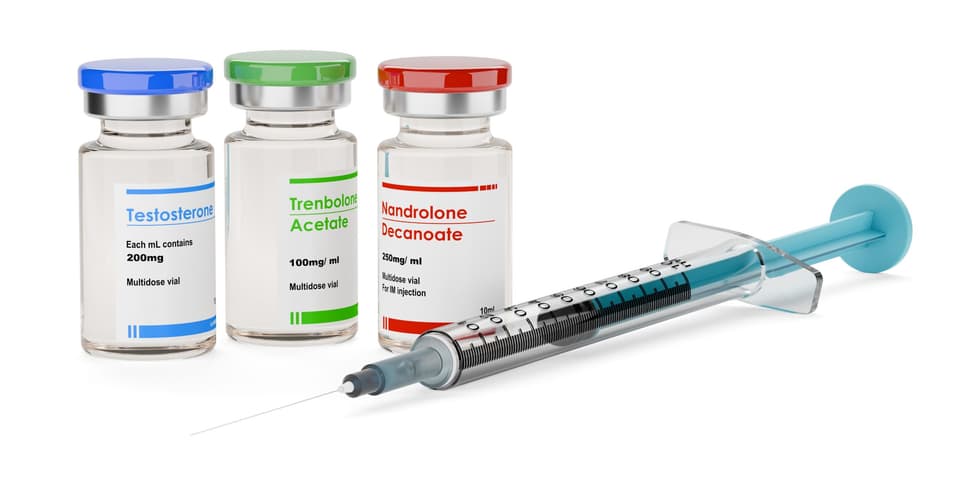
Supraphysiological anabolic steroid use involves deliberately elevating testosterone (or other anabolic compounds) far above normal physiological levels, sometimes to 2,000-5,000 ng/dL or more, specifically to accelerate muscle growth beyond natural capacity. This is pharmacological manipulation of physiology for performance, not disease treatment. The compounds used may include synthetic derivatives of testosterone (nandrolone, stanozolol, oxandrolone, trenbolone) that are not approved for general medical use and are not INVIMA-registered.
Colombian law treats these categories differently. Anti-doping regulations administered by Coldeportes (now known as the Ministry of Sport) apply to competitive athletes and are specific to organized sport competition, they do not govern the medical use of testosterone in non-athletes. For a non-competitive adult receiving TRT at physiological doses under physician supervision, anti-doping rules are entirely irrelevant. The control framework for narcotics (Law 30 of 1986) and the prescription medication framework (Decree 677 of 1995 and INVIMA oversight) are separate legal systems. Testosterone prescribed medically falls firmly within the latter.
For more on the myths and misconceptions surrounding TRT, our guide to TRT side effects: separating facts from fear addresses many of them directly.
7. For Expats and Foreign Residents: TRT in Colombia
Colombia has become one of the most popular expatriate destinations in Latin America, Bogotá, Medellín, Cartagena, Cali, and the coffee region all host large expat communities of digital nomads, retirees, remote workers, and long-term travelers. For men among these groups who are already on TRT or suspect they may need it, the legal framework is clear: testosterone is accessible, legal with a prescription, and obtainable through Colombia's private healthcare system.
But for expats specifically, navigating that system in practice is a different challenge altogether.
The Practical Friction No One Talks About
In theory, getting TRT as an expat in Colombia is straightforward. In practice, most expats who have tried to navigate it independently run into a cluster of friction points that, individually, seem minor, but together can make the process frustrating and unreliable:
- Finding a physician who understands TRT, not just who's willing to prescribe it. Most general practitioners in Colombia will write a testosterone prescription if presented with a clearly low number. But finding a physician who understands free testosterone, SHBG, estradiol optimization, and proper protocol management, and who can conduct that consultation in English, is considerably harder. The willingness to prescribe and the expertise to prescribe well are very different things.
- Navigating the medical system in Spanish. Lab requests, prescription forms, pharmacy consultations, follow-up appointments, for an expat without strong Spanish, each of these interactions carries friction. A mislabeled lab order or a misunderstood prescription can set your care back by weeks.
- Finding labs that run the right panels. Not all Colombian labs offer the same test menu. Finding a lab that runs free testosterone, sensitive estradiol, SHBG, and a full metabolic panel in a single draw, and getting results quickly, requires knowing the landscape. Many labs offer only basic panels that aren't sufficient for evidence-based TRT management.
- Pharmacy stock and formulation availability. Not every pharmacy in every city reliably stocks testosterone cypionate. Knowing which chains carry which formulations, in which concentrations, and managing the consistency of your supply over time requires coordination that most expats aren't set up to do independently.
- Continuity of care when you travel. Expats move. They take trips. Managing a prescription, maintaining supply, and ensuring your monitoring doesn't lapse when your life isn't stationary requires a provider relationship that travels with you, not a one-time interaction with a local clinic.
For a comprehensive look at how TRT access in Bogotá works in practice, including neighborhoods, labs, and what to expect, our Bogotá guide goes into city-specific detail.
Foreign Prescriptions and Colombian Pharmacies
A prescription issued by a physician in the United States, United Kingdom, Canada, or another country is not valid at a Colombian pharmacy on its own. Colombian pharmacies require a fórmula médica issued by a licensed Colombian physician. This does not mean you need to start from scratch, a Colombian doctor can review your existing labs and medical history and issue a Colombian prescription based on your established treatment. But it does mean you need to engage the Colombian medical system, and the quality of that engagement matters as much as the legal formality of the prescription itself.
Why Expats Choose TRT Optima
TRT Optima was built specifically to remove the friction points that expats and foreign residents encounter. Our clinical team works in English, orders the right panels at partner labs, coordinates pharmacy access, and manages follow-up care remotely when needed. You don't have to navigate a foreign healthcare system in a second language, hope you found a physician who understands hormone therapy, or figure out which pharmacy has your formulation in stock. We handle the coordination, so you get the medical outcome. If this describes what you are looking for, get your free clinical assessment started here.
Healthcare Access Pathways for Expats
Colombia has two main healthcare tracks: the public EPS (Entidades Promotoras de Salud) system, available primarily to residents enrolled in the national social security system, and the private healthcare sector, available to anyone, Colombian citizen, foreign resident, or visitor, who pays out-of-pocket or has private health insurance. TRT is overwhelmingly accessed through the private sector. Private consultations, laboratory work, and pharmacy costs are all substantially lower than equivalent private-sector costs in the US or UK.
8. For Medical Tourists: Accessing TRT During a Stay in Colombia
A growing segment of people accessing TRT in Colombia are not expats or residents, they are short-term visitors specifically traveling for affordable, high-quality healthcare. Colombia is developing a reputation as a TRT medical tourism destination, driven by a clear legal framework, accessible physician consultations, significantly lower costs than the US or UK, and INVIMA-regulated pharmacy access.
From a legal standpoint, a short-term visitor can legally receive a TRT prescription from a Colombian physician, fill it at a Colombian pharmacy, and use the medication. Modern labs in Bogotá, Medellín, and Cartagena can return comprehensive hormone panels within 10-24 hours.
The legal pathway is clear. The practical reality of executing it well, especially solo, on a short timeline, is something else entirely.
What Going It Alone Looks Like
A medical tourist who tries to navigate TRT access independently is essentially hoping at every step: hoping the physician they found online or through a hotel concierge actually understands hormone therapy; hoping the lab they walk into runs a comprehensive panel rather than just total testosterone; hoping the prescription they receive reflects genuine clinical assessment rather than a perfunctory response to a paying patient who showed up with a symptom list; hoping the pharmacy has the right formulation; hoping the protocol they're sent home with is actually dialed in for them. Any one of these links failing means a wasted trip, a useless prescription, or, worse, starting a TRT protocol that wasn't properly established.
There is also the practical issue of follow-up. TRT is not a one-visit event. If a medical tourist starts testosterone on a trip to Bogotá and then returns to a country where TRT is heavily gatekept or expensive, they may find themselves without access to the monitoring their protocol requires, or unable to continue care at all.
TRT Optima as a Turnkey Solution for Medical Tourists
TRT Optima is specifically designed for the medical tourism scenario. We provide a coordinated, end-to-end process from initial blood work to physician evaluation to prescription to pharmacy access to ongoing remote monitoring, managed by a team that specializes in exactly this. You do not have to assemble this yourself. You do not have to hope that each element works.
Taking Medication Home
A visitor who receives a prescription and purchases testosterone in Colombia faces a critical customs consideration on departure: the rules of their home country apply when they land. In the United States, testosterone is a Schedule III controlled substance, and importing it without DEA authorization, even with a valid foreign prescription, is a federal violation. UK visitors face similar restrictions under the Misuse of Drugs Act. Australian visitors must comply with Schedule 4 import permit requirements. Each patient is responsible for understanding the import rules of their home country. The fact that TRT was legally obtained in Colombia does not override the import restrictions of the destination country.
For residents of countries with more permissive frameworks, including much of Latin America, the legal continuity of treatment across borders is substantially less complicated.
9. Operation Pangea and Colombia: What Every TRT Patient Needs to Know
If you have been researching testosterone legality in Colombia and come across references to "Operation Pangea," especially in forums, fitness communities, or social media, it is essential to understand what this operation actually is, what it actually targets, and what it means for patients seeking legitimate TRT. This section provides the most complete publicly available explanation of how Pangea intersects with the Colombian pharmaceutical landscape.
What Is Operation Pangea?
Operation Pangea is an annual, INTERPOL-coordinated global law enforcement operation targeting the illegal online sale of counterfeit and unauthorized pharmaceutical products. It has been running every year since 2008, when it was launched by the Permanent Forum on International Pharmaceutical Crime (PFIPC) and INTERPOL in response to the explosion of illegal online pharmacies following widespread internet adoption. Each edition involves customs authorities, health regulatory agencies, police, and INTERPOL member countries cooperating to identify and shut down criminal networks distributing fake or unlicensed medicines, and to arrest the operators behind them.
To be completely clear about what Operation Pangea targets: counterfeit medications, black-market pharmaceutical products, unlicensed online pharmacies, and the criminal networks that manufacture and distribute them. It does not target patients receiving medically prescribed testosterone therapy through legitimate channels. The distinction is not subtle, it is fundamental to the purpose of the entire operation.
Operation Pangea XVII (December 2024, May 2025)
The most recent large-scale annual operation, Operation Pangea XVII, ran from December 2024 to May 2025 across 90 countries and produced the largest results in the operation's history:
- 50.4 million doses of illegal and counterfeit pharmaceuticals seized
- Estimated value of seized products: USD $65 million
- 769 suspects arrested
- 123 criminal groups dismantled
- 1,728 investigations launched worldwide
- Approximately 13,000 criminal-linked websites, social media pages, channels, and automated bots shut down
Operation Pangea XVIII (10-23 March 2026)
The most recent completed operation at the time of writing, Operation Pangea XVIII, was conducted between 10 and 23 March 2026, a two-week enforcement window coordinated across 90 countries and territories. Results reported by INTERPOL included:
- 6.42 million doses of unapproved or counterfeit pharmaceuticals seized
- Estimated value: USD $15.5 million
- 269 arrests
- 66 criminal groups dismantled
- 392 investigations launched
- 158 search warrants executed
- Approximately 5,700 websites, social media pages, online marketplaces, and automated bots identified and disrupted
The official INTERPOL press release for Pangea XVIII is available at interpol.int. The broader Pangea operational history and framework are documented at the INTERPOL pharmaceutical crime operations page.
What Was Actually Seized: Anabolic Steroids Dominated
Among all pharmaceutical categories seized in Operation Pangea XVIII, anabolic steroids were the single largest category, 86,732 doses seized globally. INTERPOL described demand as "largely driven by the bodybuilding and fitness communities, with production detected in parts of Eastern and South-Eastern Europe and established manufacturing hubs in India, the United Kingdom and the United States." In Bulgaria, authorities dismantled a clandestine production facility and seized millions of mislabelled pills, ampoules, and injectables, a direct example of the underground manufacturing Pangea specifically targets.
The operation also identified growing demand for peptides, synthetic substances sold online as "research chemicals" or "cosmetic peptides" to circumvent pharmaceutical regulations, despite having no approved dosage or safety standards for human use. Significant seizures were reported in Australia, Ireland, and New Zealand. If a product is being sold under a label designed to avoid pharmaceutical scrutiny, it is exactly the type of product Pangea is designed to seize.
Colombia's Role as an INTERPOL Member Country
Colombia is a full member of INTERPOL and participates in Pangea operations. In Operation Pangea XVIII, several countries in the Latin American region were involved, Argentina participated, and Ecuador saw arrests of individuals involved in illicit pharmaceutical trafficking. Colombia, as an active INTERPOL member with an established national pharmaceutical regulatory authority (INVIMA), cooperates with these international enforcement frameworks.
What this means practically: the Colombian legal and law enforcement infrastructure is aligned with INTERPOL's anti-counterfeit-pharmaceutical mission. Black-market testosterone operations, underground labs, gym dealers sourcing from clandestine manufacturers, illegal online pharmacies, are exposed to exactly the same enforcement risk as in any other participating country.
The Critical Takeaway for TRT Patients
Legal, physician-prescribed TRT through a licensed clinic is the exact opposite of what Operation Pangea targets. When INTERPOL seizes black-market anabolic steroids, it is seizing products that:
- Were manufactured in clandestine facilities with no quality controls
- May contain the wrong compound, wrong dosage, or dangerous contaminants
- Were distributed by criminal networks, not licensed pharmacies
- Were sold without prescriptions, without physician oversight, and without any safety monitoring
A patient at TRT Optima, who has had comprehensive blood work done, been evaluated by a physician who specializes in hormone therapy, received a legal fórmula médica, and purchased INVIMA-registered testosterone from a licensed pharmacy, is operating entirely outside the scope of what Pangea addresses. Going the prescription route does not just protect you legally. It protects you medically.
Start With Expert-Led Blood Work. TRT Optima's comprehensive hormone panel covers everything the Endocrine Society guidelines require, and everything general practitioners typically miss. Physician-reviewed results. Evidence-based protocols. Fully legal, fully monitored. Get Your Free Clinical Assessment.
10. INVIMA's Role in Pharmaceutical Safety
INVIMA, the Instituto Nacional de Vigilancia de Medicamentos y Alimentos, is the Colombian government agency responsible for the safety, quality, and efficacy of all pharmaceutical products sold in the country. Understanding INVIMA's function is essential to understanding why legal TRT in Colombia is genuinely safe, not just legally compliant.
What INVIMA Does
INVIMA performs the same essential function as the US FDA, Health Canada, or the European Medicines Agency: it evaluates pharmaceutical products before they can be marketed, manufacturing facilities before they can produce medications for the Colombian market, and ongoing product safety after approval. Specifically, INVIMA:
- Issues registros sanitarios (health registrations) for all medications. No product can be legally sold in Colombia without this registration.
- Evaluates manufacturing facilities, whether domestic or international, to ensure compliance with Good Manufacturing Practice (GMP) standards.
- Operates a national pharmacovigilance system that collects and analyzes adverse drug reaction reports and can initiate market withdrawals when safety signals emerge.
- Conducts post-market surveillance, including random product sampling and testing of medications already in distribution.
- Enforces pharmaceutical law, including the authority to conduct inspections, issue sanctions, and suspend licenses of pharmacies or manufacturers found to be non-compliant.
- Cooperates with international bodies including WHO, PAHO, and INTERPOL on pharmaceutical crime operations, including Operation Pangea.
11. The Black Market Problem, and the Problem Nobody Talks About: Legal But Unmanaged TRT
Most discussions of testosterone access in Colombia focus on the obvious problem: black-market steroids, unregulated, potentially contaminated, and legally exposed. That problem is real and deserves full coverage. But there is a second problem that almost nobody talks about, and that affects far more people: legal TRT that is improperly managed.
The Black Market: What It Is and Why It Is Dangerous
Black-market testosterone and anabolic steroids circulate through several channels in Colombia: gym-based dealers sourcing from domestic and international underground labs; imported products from countries with weaker pharmaceutical controls; and social media platforms and encrypted messaging apps where transactions are conducted semi-anonymously. Underground labs, whether in Colombia, elsewhere in Latin America, Eastern Europe, or Asia, manufacture products without any of the controls INVIMA requires: no sterility testing, no accurate dosing verification, no contamination screening.
The health risks are documented and serious:
- Contamination. Oil-based injectables manufactured without pharmaceutical-grade sterility protocols can be contaminated with bacteria, fungi, or endotoxins. Injection site abscesses are among the most common complications, and systemic infections from contaminated injectables can be life-threatening.
- Incorrect dosing. A vial labelled "200mg/mL testosterone cypionate" from an underground lab may contain anywhere from 50mg to 300mg per mL, or none of the labeled compound at all. Dosing errors at this scale cause serious hormonal disruption.
- Wrong compound. Testing of black-market products has repeatedly found that labelled compounds are partially or entirely substituted with cheaper, different, or more dangerous alternatives.
- Legal exposure. Possession without a prescription is illegal in Colombia. Distribution is a more serious offense. And as Operation Pangea makes clear, international enforcement is actively targeting the supply chains that feed this market.
The Problem Nobody Talks About: Legal But Poorly-Managed TRT
Here is the part that matters just as much, and that you will not find in most articles: legal TRT managed by a physician who does not specialize in hormone therapy carries its own category of risk.
Consider the scenario. A patient gets a total testosterone test showing 285 ng/dL. A general practitioner writes a prescription for testosterone cypionate, 200mg every two weeks, a common but suboptimal injection schedule that produces large testosterone peaks and troughs rather than stable physiological levels. No estradiol baseline is taken. No follow-up blood work is scheduled. Six months later, the patient has elevated hematocrit, is experiencing mood swings from unmanaged estradiol conversion, and has no physician monitoring any of it. This is a legal prescription. This is also a protocol that is creating new health problems rather than solving existing ones.
The risks of unmonitored TRT, elevated hematocrit leading to increased clotting risk, unmanaged estradiol causing cardiovascular and mood effects, undetected PSA elevation, are precisely the reason the Endocrine Society's Clinical Practice Guidelines require ongoing monitoring as a core component of standard care. The landmark TRAVERSE Trial (2023, New England Journal of Medicine), the largest randomized controlled trial of TRT safety ever conducted, found no increased cardiovascular risk in properly monitored patients. "Properly monitored" is the operative phrase. The safety data supports TRT done right. It does not support TRT done carelessly.
This is why the distinction between legal access to testosterone and expert-led, evidence-based TRT matters so much. The former is easy to obtain in Colombia. The latter requires a physician and a clinic that actually specialize in it. For a detailed look at what good TRT side-effect management requires, our guide to TRT side effects: separating facts from fear separates evidence-based facts from fear-driven myths.
The symptoms of low testosterone are real and deserve real medical attention, not self-medication with unverified compounds from unaccountable sources, and not a cookie-cutter prescription from a doctor who won't check your estradiol.
12. How Colombia Compares to Other Countries
To put Colombia's legal framework in global context, the following table compares the regulatory classification of testosterone across major countries, including classification, prescription requirements, practical accessibility, and consequences for unauthorized possession.
| Colombia | Prescription-only pharmaceutical (INVIMA/Decree 677). Not a controlled substance. Yes High legally. No mandatory waits, no insurance pre-auth, affordable private care. Quality specialized care requires the right provider. Confiscation; potential sanctions. Not criminalized at narcotic level. |
| United States | Schedule III Controlled Substance (Anabolic Steroid Control Act 1990) Yes, from a US-licensed physician Moderate-Low. Insurance pre-authorization often required; many PCPs reluctant to prescribe; specialist referrals common. Federal felony. Up to 5 years prison for first possession offense. |
| United Kingdom | Class C under Misuse of Drugs Act 1971 Yes Low via NHS. Waiting lists, strict diagnostic thresholds. Private clinics exist but costly. Up to 2 years prison for importation/supply. Personal possession: up to 2 years. |
| Australia | Schedule 4 (Prescription Only Medicine) + strict import controls Yes, TGA permit required for importation Moderate. Available via GP or specialist. Importing personal supply requires TGA permit. Significant penalties for unauthorized import. Criminal charges possible for supply. |
| Thailand | Category 3 controlled drug (prescription required) Yes High via private clinics. Very accessible, low-cost. Popular medical tourism destination. Fines for unauthorized possession. Export restrictions significant. |
| Mexico | Prescription-only medication (COFEPRIS regulated) Yes, but enforcement varies significantly High in practice. Historically sold OTC in border pharmacies; enforcement inconsistent. Technically illegal without prescription. Enforcement historically low but increasing. |
| Brazil | Prescription-only (ANVISA) under special control list Yes, special prescription form (notificação de receita) Moderate. Requires special controlled prescription form; more bureaucratic than Colombia. Significant penalties. ANVISA has stronger enforcement than Colombia for unauthorized possession. |
The picture that emerges is consistent: Colombia offers one of the most patient-friendly legal frameworks for legitimate medical TRT in the world, combining clear prescription requirements with accessible private healthcare, INVIMA quality oversight, and no controlled-substance bureaucracy. For patients who have faced gatekeeping, arbitrary refusals, or insurance denials in their home countries, Colombia's medical environment is genuinely different. The key variable is not legal access, it is clinical quality.
13. Frequently Asked Questions
Is testosterone a controlled substance in Colombia?
No. Testosterone is classified as a prescription-only pharmaceutical under Colombia's Decree 677 of 1995 and regulated by INVIMA. It does not appear on Ministry of Health Resolution 1478 of 2006, which defines medications subject to special narcotic-level control. It is not listed under Law 30 of 1986, Colombia's narcotics statute. Colombia's regulatory framework treats testosterone as a standard prescription medication, not a controlled substance with the additional restrictions that classification would entail.
Can I buy testosterone over the counter in Colombia?
No. Testosterone is a prescription-only medication. Any pharmacy dispensing it without a valid fórmula médica from a licensed Colombian physician is violating Colombian pharmaceutical law. Major pharmacy chains, Farmatodo, Cruz Verde, Droguería La Rebaja, require a prescription before dispensing. If a vendor, gym dealer, or online seller offers testosterone without a prescription requirement, they are operating outside the law and you should not purchase from them.
What happens if I'm caught with testosterone without a prescription in Colombia?
Possession of a small personal-use quantity of testosterone without a prescription is not a criminal narcotics offense in Colombia. However, it can result in confiscation of the medication, questioning by authorities, and potential administrative sanctions. The risk increases significantly with larger quantities or if the product is counterfeit or unregistered. The simplest protection is a valid Colombian prescription from a physician who specializes in hormone therapy, a process that takes two to three days at most.
Can I bring my testosterone from the US or UK to Colombia?
Yes, for a reasonable personal-use supply, typically up to 90 days, accompanied by your original prescription, pharmacy receipt or dispensing label, and ideally a physician letter confirming active treatment. Keep medication in its original pharmaceutical packaging. Large quantities suggesting distribution intent will attract customs scrutiny. Note that the reverse, taking Colombian-prescribed testosterone back to the US or UK, is subject to those countries' import rules, which are considerably stricter.
Is it legal to order testosterone online in Colombia?
Ordering testosterone from unlicensed online pharmacies, including foreign websites, social media sellers, or messaging-app dealers, is not legal. These sources do not issue valid Colombian prescriptions, do not supply INVIMA-registered products, and are exactly the type of operations targeted by Operation Pangea. Beyond the legal risk, the health risk is substantial: products may be counterfeit, contaminated, mislabeled, or entirely different compounds from what is advertised. Legal testosterone purchasing requires a prescription from a licensed physician and purchase from a licensed pharmacy.
Do I need Colombian health insurance for TRT?
No. TRT is overwhelmingly accessed through the private healthcare sector in Colombia on a direct-pay basis. Because private healthcare costs in Colombia are a fraction of equivalent private costs in the United States or United Kingdom, most patients, Colombian and expat alike, find the direct-pay model entirely practical. See our pricing page for full transparency on what care costs at TRT Optima.
Are peptides legal in Colombia?
The legal status of peptides in Colombia is nuanced. Peptides used in clinical medicine (GLP-1 agonists like semaglutide, certain growth factors) are subject to standard INVIMA pharmaceutical registration and prescription requirements. Research peptides, compounds like BPC-157, TB-500, CJC-1295, ipamorelin, occupy a gray zone: not approved pharmaceutical products and without INVIMA registrations for human use, but also not explicitly scheduled as controlled substances. Operation Pangea XVIII specifically highlighted the growing global seizure of peptides sold as "research chemicals" or "cosmetic peptides," flagging them as a priority enforcement category. Anyone interested in evidence-based peptide protocols should access them through legitimate medical channels with physician oversight. Our advanced support services provide medical oversight for patients interested in these protocols.
What is Operation Pangea and does it affect TRT patients?
Operation Pangea is an annual INTERPOL-coordinated global enforcement operation targeting the illegal online trade in counterfeit and unauthorized pharmaceutical products, running since 2008. Pangea XVIII (March 2026) seized 6.42 million doses of illicit pharmaceuticals, made 269 arrests, and dismantled 66 criminal groups across 90 countries, with anabolic steroids as the single largest seized category. Colombia is an INTERPOL member country that participates in these operations. Operation Pangea does not target patients who hold valid prescriptions and purchase from licensed pharmacies. It targets black-market supply chains, counterfeit manufacturers, and unlicensed online pharmacies. Going the legal route with a prescription from a specialized physician is both medically safer and legally protected from everything Pangea represents.
How do I verify my testosterone is INVIMA-approved?
Visit invima.gov.co and use the public product registry search tool (Consulta de Registros Sanitarios). Search by the product name or the registro sanitario number printed on the packaging. Confirm the registration status shows "VIGENTE" (active/current) and that the product details match your medication. If a product has no registration, or the registration is expired or suspended, it is not an approved Colombian pharmaceutical product. You can also cross-check the product name against INVIMA's separate Alertas Sanitarias database, described above, to see whether it has already been flagged as fraudulent.
Can foreigners get TRT prescriptions in Colombia?
Yes. There is no nationality requirement for receiving a medical prescription from a licensed Colombian physician. Any person, Colombian citizen, permanent resident, expat, or short-term visitor, can be evaluated, diagnosed, and prescribed TRT if they meet the clinical criteria. Foreign prescriptions are not directly valid at Colombian pharmacies, but a Colombian physician can review your existing medical history and labs and issue a valid Colombian prescription based on that review. Many of TRT Optima's patients are expats and international patients. Our clinical team includes physicians experienced in working with international patients in English.
What are the risks of testosterone therapy I should know about?
TRT is an evidence-based treatment with a strong safety profile when properly monitored. The landmark TRAVERSE Trial (2023, New England Journal of Medicine) found no increased risk of major cardiovascular events compared to placebo in men with low testosterone receiving TRT. Known considerations that require monitoring include elevated hematocrit, estradiol levels, and PSA changes, all manageable with regular blood work by a physician who knows what to look for. The risks exist primarily when TRT is unmonitored. Our guide to TRT side effects separates evidence-based facts from the fear-driven myths that discourage men from seeking appropriate treatment.
Is TRT only for older men?
No. While testosterone levels naturally decline with age, typically about 1-2% per year after age 30, symptomatic hypogonadism can affect men of any adult age, including men in their 20s and 30s. The diagnostic standard is not age but clinical presentation: confirmed low testosterone on at least two separate morning blood draws, combined with symptoms consistent with hypogonadism. Our overview of the 12 signs of low testosterone can help you determine whether getting tested makes sense for you.
Ready to Do This Right?
Legal access to testosterone in Colombia is easy. Evidence-based, physician-led TRT that actually optimizes your health is what TRT Optima provides.
Comprehensive blood work. Specialist physician evaluation. INVIMA-registered medications. Ongoing monitoring included. Get Your Free Clinical Assessment.
14. Medical and Legal Disclaimer
This article is for educational and informational purposes only. It does not constitute medical advice, legal advice, or a substitute for consultation with a qualified healthcare professional or Colombian legal practitioner. Pharmaceutical laws and regulations in Colombia may change; readers should verify current requirements with INVIMA, the Colombian Ministry of Health, or a licensed attorney. Information about international drug regulations reflects general public knowledge and may not account for recent legislative changes in specific jurisdictions. Laws regarding the importation of controlled or prescription substances vary by country and are the sole responsibility of the traveler to research and comply with.
TRT Optima does not provide medical services directly. All medical evaluations, prescriptions, and treatment decisions are made exclusively by licensed Colombian physicians. Treatment eligibility is determined solely on the basis of clinical evaluation and laboratory results. TRT Optima does not prescribe testosterone to individuals who do not meet clinical diagnostic criteria. References to clinical studies are provided for educational context and should not be construed as endorsements of specific treatments for any individual. Always consult with a qualified healthcare provider before initiating, modifying, or discontinuing any hormone therapy. Individual results vary.
This article is educational and does not replace professional medical advice. Diagnosis, prescriptions and treatment decisions are made by licensed physicians.