
This is the question that keeps men stuck for months – sometimes years. You have read the articles about sleep and exercise. You have tried the supplements. Maybe you overhauled your diet, joined a gym, and cut back on alcohol. Some of it helped. Some of it did not. And now you are wondering: is this the best I can do naturally, or do I actually need medical treatment?
The internet makes it worse. One camp insists that TRT is dangerous and unnecessary – a slippery slope toward dependency. The other camp insists that every man over 30 needs testosterone and natural methods are a waste of time. Neither is true. The honest answer – the one that actually serves your health, lives in the middle, and it depends entirely on data that only your blood work can provide.
This article is not going to tell you what to do. It is going to give you the framework to figure it out, based on evidence, not ideology.
The False Binary – Why “TRT vs. Natural” Is the Wrong Question
The biggest misconception in men’s hormonal health is that you must choose one path or the other. In clinical practice, this is almost never how it works.
The men who get the best outcomes from testosterone replacement therapy are not men who abandoned lifestyle optimization in favor of a prescription. They are men who combine both: a properly dosed, medically monitored protocol built on top of a foundation of quality sleep, structured exercise, sound nutrition, and managed stress.
Conversely, the men who succeed with natural methods alone are not avoiding medicine out of fear – they are men whose blood work confirms that their levels respond adequately to lifestyle intervention.
The real question is not “TRT or natural?” It is: what is causing my low testosterone, and can it be corrected without medication?
The answer depends on your diagnosis. And diagnosis requires data. Our breakdown of what your testosterone labs actually mean explains every marker in a comprehensive hormone evaluation and how to interpret your results like a clinician.
What Natural Methods Can, and Cannot, Do
Lifestyle optimization is powerful. We published an entire evidence-based guide to natural testosterone optimization because the science behind it is real. But it has a ceiling, and understanding where that ceiling sits is the key to making the right decision.
Where Natural Methods Excel
Natural interventions work best when your testosterone is being suppressed by correctable external factors. The research is clear on several of these:
- Sleep deprivation. A landmark study by Leproult and Van Cauter (2011) published in JAMA showed that restricting sleep to five hours per night for one week reduced testosterone by 10–15% in healthy young men. Restoring sleep quality can reverse this. If poor sleep and impaired recovery are dominant patterns in your life, addressing them is one of the highest-leverage changes you can make.
- Obesity. A meta-analysis by Corona et al. (2016) confirmed that weight loss in obese men consistently increases testosterone – in some cases by 100–200 ng/dL. This is driven by reduced aromatase activity: less fat tissue means less conversion of testosterone to estrogen.
- Sedentary lifestyle. Resistance training, particularly compound lifts, produces both acute and chronic elevations in testosterone levels. A 2016 review by Kumagai et al. confirmed the hormonal benefits of structured exercise, especially heavy compound movements like squats, deadlifts, and rows.
- Nutritional deficiencies. Deficiencies in vitamin D, zinc, and magnesium are independently associated with lower testosterone. Correcting them can produce measurable improvements, but only if you are actually deficient. Random supplementation with adequate baseline levels does nothing.
- Chronic stress. Sustained cortisol elevation directly suppresses the hypothalamic-pituitary-gonadal (HPG) axis. Stress management is not a soft recommendation, it is a biochemical intervention for testosterone production. Chronic cortisol and poor sleep form a feedback loop that steadily erodes hormonal function. Breaking that cycle is often the single most important step.
For men whose testosterone sits in the low-normal range (350–500 ng/dL) primarily because of these factors, comprehensive lifestyle optimization can push levels meaningfully upward, sometimes enough to resolve symptoms entirely.
Where Natural Methods Hit a Wall
Here is the part that supplement companies and fitness influencers will not tell you: natural methods have a biological ceiling. They can remove suppressors, but they cannot create production capacity that does not exist.
If your testosterone is low because of:
- Primary hypogonadism – the testes themselves cannot produce adequate testosterone due to damage, genetic factors, or disease. No amount of sleep or squats will compensate for testes that cannot respond to stimulation. Our detailed guide to the real science behind hypogonadism explains the biology and how it differs from age-related decline.
- Secondary hypogonadism – the pituitary gland is not sending adequate luteinizing hormone (LH) to stimulate production. Even perfectly healthy testes cannot produce testosterone without the right signals from above.
- Age-related decline beyond lifestyle recovery. Research by Araujo et al. (2007) documented that testosterone declines approximately 1–2% per year after age 30. For some men, cumulative decline reaches a point where lifestyle optimization slows the fall but cannot reverse it.
- Prior testicular damage – from injury, infection (such as orchitis), varicocele, or exposure to certain medications, chemotherapy, or radiation.
- Genetic factors – some men constitutionally produce less testosterone. Their biological “set point” is lower regardless of lifestyle.
In these scenarios, a man can execute every natural strategy perfectly and still have testosterone levels well below what his body needs to function optimally. Telling that man to “just try harder” is not helpful — it is medically irresponsible.
The Decision Framework, A Data-Driven Approach
Responsible clinicians do not guess. They follow a systematic process. Here is the framework that separates evidence-based decision-making from ideology.
Step 1 – Get Comprehensive Blood Work
Everything starts here. You cannot make an informed decision without knowing your actual numbers — not just total testosterone, but the full hormonal picture.
The minimum panel should include:
| Marker | Why It Matters for This Decision |
|---|---|
| Total Testosterone | Your overall level – the first data point, but not the whole story |
| Free Testosterone | The bioavailable fraction – some men have “normal” total T but low free T due to high SHBG |
| SHBG | Determines how much testosterone is actually available to your tissues |
| Estradiol (E2) | High estradiol relative to testosterone suggests excess aromatization – often correctable with weight loss |
| LH & FSH | The critical diagnostic fork: elevated LH/FSH with low T = primary hypogonadism (testes failing); low LH/FSH with low T = secondary hypogonadism (pituitary failing) |
| Thyroid (TSH, T3, T4) | Thyroid dysfunction can mimic every symptom of low testosterone – ruling it out is essential |
| Hematocrit & CBC | Baseline safety markers for TRT monitoring |
| Metabolic Panel | Insulin resistance, glucose, and lipids – metabolic dysfunction suppresses testosterone |
Our guide on what your testosterone labs actually mean explains how to interpret each marker and what the numbers reveal about your hormonal health.
According to the Endocrine Society’s 2018 Clinical Practice Guidelines, diagnosis requires low testosterone on at least two separate morning blood draws combined with clinical symptoms. A single test is not sufficient.
Step 2 — Identify the Root Cause
This is where the LH/FSH results become critical – and where many men (and some physicians) take shortcuts they should not.
Scenario A – Low T + Elevated LH/FSH
Diagnosis: Primary hypogonadism — the testes are not responding despite the brain sending adequate signals.
Implication: Natural methods alone are unlikely to resolve this. The production machinery itself is impaired. TRT is the standard medical treatment. Our article on the real science behind hypogonadism covers the diagnosis in depth.
Scenario B – Low T + Low or Normal LH/FSH
Diagnosis: Secondary hypogonadism – the brain is not sending adequate signals to the testes.
Implication: The cause matters. Secondary hypogonadism can result from obesity, sleep apnea, chronic stress, medications (especially opioids), or pituitary pathology. Some of these causes are reversible through lifestyle changes. Others are not.
Scenario C – Low-Normal T + Lifestyle Red Flags
Diagnosis: Functional suppression – testosterone is being held down by correctable factors.
Implication: This is where natural methods shine. Fix the suppressors first, retest in 3–6 months, then reassess.
Without this diagnostic step, you are making a consequential medical decision without the most important information. It is the difference between treating a disease and treating a symptom.
Step 3 – Give Lifestyle Optimization a Genuine Trial
If your blood work suggests that correctable factors are at play (Scenario B or C above), the responsible approach is to address those factors first – and give the intervention enough time to work.
“Enough time” does not mean two weeks. It means 3–6 months of consistent, comprehensive changes:
- Sleep: 7–9 hours nightly with consistent timing. Sleep is the foundation of hormonal health – disrupting it suppresses testosterone faster than almost anything else.
- Resistance training: 3–4 sessions per week with compound movements. Isolation curls in the cable machine do not move the needle the way squats, deadlifts, and presses do.
- Nutrition: Adequate protein (1.6–2.2 g/kg), healthy fats, micronutrient-rich whole foods, and a moderate caloric deficit if overweight. Crash diets tank testosterone – sustainable fat loss supports it.
- Stress management: Active strategies, not just “trying to relax.” Structured breathing, meditation, time outdoors, therapy – whatever actually brings cortisol down.
- Alcohol reduction: Minimize or eliminate. Chronic consumption directly suppresses testosterone production and raises estrogen through increased aromatization.
- Body composition: If overweight, targeted fat loss to reduce metabolic burden and excess aromatase activity.
After this period, retest. If your levels have improved significantly and your symptoms have resolved, you have your answer: your body responded, and ongoing lifestyle management is your path forward.
If your levels have barely moved despite genuine, consistent effort, or if symptoms persist despite modest hormonal improvement, that is clinically meaningful information. It means you have likely reached the ceiling of what natural methods can achieve for your specific biology.
Step 4 – Make an Informed Decision
If you have reached this step, you have data, context, and a genuine trial period behind you. The decision is no longer theoretical – it is evidence-based.
Natural methods are likely sufficient when:
- Your total testosterone is above 400–450 ng/dL after lifestyle optimization
- Your symptoms have meaningfully improved
- Your LH/FSH are normal (indicating the system works — it just needed support)
- You are willing to maintain the lifestyle changes that produced the improvement
TRT becomes the medically appropriate next step when:
- Your total testosterone remains below 300 ng/dL despite genuine lifestyle optimization (as defined by the Endocrine Society’s diagnostic threshold)
- You have symptomatic testosterone deficiency confirmed on at least two morning blood draws
- Your blood work indicates primary or irreversible secondary hypogonadism
- Symptoms persist despite measurable lifestyle improvements — chronic fatigue, low libido, brain fog, and mood disturbances like depression and anxiety that meaningfully reduce quality of life
- You understand that TRT is an ongoing commitment requiring regular monitoring and awareness of potential side effects
The “Gray Zone” – What If You Are Between 300 and 450 ng/dL?
Most men researching this topic do not have testosterone at 150 or 800 ng/dL. They are in the gray zone – technically within the reference range, but symptomatic and unsure whether treatment is warranted.
This is where nuance matters most. The Endocrine Society guidelines define deficiency at below 300 ng/dL, but as Travison et al. (2017) demonstrated in their harmonized reference ranges study, “normal” is a statistical range derived from population data – it does not mean every man functions optimally at every point within it.
A man at 320 ng/dL with debilitating fatigue, significant loss of libido, and progressive cognitive decline is not in the same clinical situation as a man at 320 ng/dL who feels fine. Context matters. Symptoms matter. And the trajectory matters – a man whose testosterone dropped from 600 to 350 over three years is in a fundamentally different clinical picture than a man who has always been at 350.
Understanding where your testosterone levels should be for your age provides additional context. What is “normal” at 25 is different from what is expected at 50. A level that looks statistically normal may still represent a significant decline from your individual baseline. For a deeper look at the science of testosterone decline and how it differs from clinical hypogonadism, see our breakdown of whether it is aging or something more.
This is precisely why the decision should not be made by an algorithm or a forum post. It should be made by a qualified physician who looks at the complete picture: symptoms, blood work, medical history, lifestyle factors, and trajectory over time.
Side-by-Side Comparison – What to Realistically Expect
| Factor | Natural Optimization | TRT (Medically Supervised) |
|---|---|---|
| Typical testosterone increase | 50–200 ng/dL (varies widely by individual) | Targets 500–800 ng/dL range (physician-adjusted) |
| Time to see results | 3–6 months of consistent effort | 2–4 weeks for initial improvements; 3–6 months for full effect |
| Sustainability | Requires ongoing lifestyle maintenance | Requires ongoing treatment + monitoring |
| Medical monitoring needed | Periodic blood work (recommended annually) | Regular blood work every 3–6 months (required) |
| Fertility impact | None – may improve fertility | Can suppress sperm production; alternatives exist for men planning children |
| Side effect profile | Minimal (overtraining risk, injury risk) | Manageable with monitoring: polycythemia, lipid changes, acne |
| Works for hypogonadism? | No (cannot create missing production capacity) | Yes – the standard medical treatment |
| Cost in Colombia | Gym membership + food quality investment | Affordable – see our pricing breakdown |
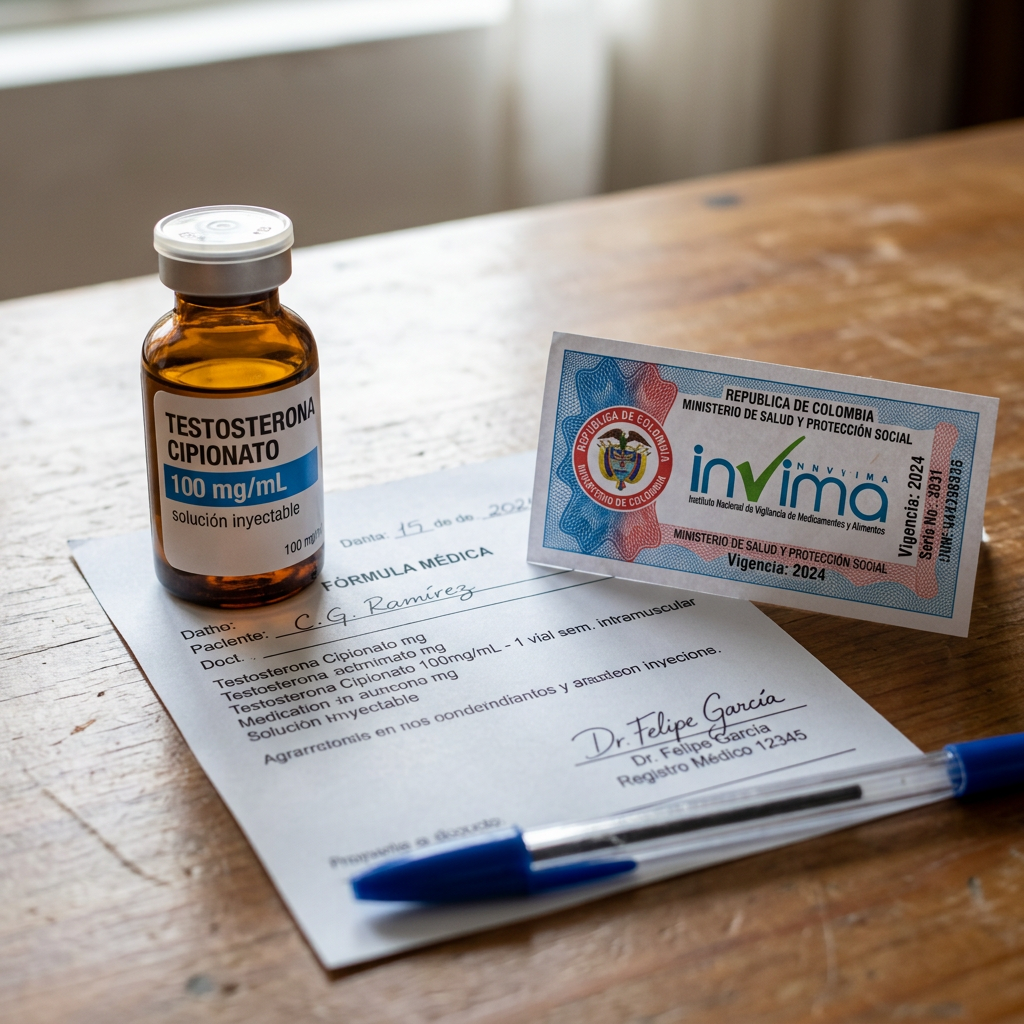
| Legal requirements | None | Fully legal in Colombia with a physician’s prescription |
| Best combined with | Blood work monitoring to track progress | Lifestyle optimization (significantly enhances outcomes) |
The most important row in this table is the last one. TRT without lifestyle optimization produces suboptimal results. Natural methods without accurate diagnosis can mean years of unnecessary suffering. The best outcomes come from combining both approaches appropriately.
What the Best Clinics Actually Do
A responsible TRT clinic does not hand every man a prescription. And a responsible physician does not tell every man to “just eat better and sleep more” when his blood work shows clear hypogonadism.
At TRT Optima, every case begins with a comprehensive blood work analysis – not a sales conversation. If your levels are healthy and your symptoms have a lifestyle explanation, we tell you that. If your levels indicate clinical deficiency, we explain the options honestly – including the real risks, the realistic benefits, and what ongoing monitoring looks like. That is how a responsible TRT protocol should work – and how it differs from clinics that skip the diagnostic work entirely.
This is available to men across Colombia – whether you are in Bogotá, Medellín, Cali, Cartagena, Barranquilla, or anywhere else in the country. For expats navigating the Colombian healthcare system, our guide to testosterone legality in Colombia covers everything you need to know about accessing treatment legally.
The evaluation process is straightforward: blood work first, physician review, then a transparent conversation about what the data shows and what it means for your specific situation. Learn more about each step in our complete process overview.
Red Flags – Signs You Are Getting Bad Advice
Whether you are considering natural methods or TRT, watch for these warning signs that the source of advice is not acting in your best interest:
From the “All Natural” Side
- Claims that lifestyle changes can fix any testosterone level, regardless of diagnosis
- Selling expensive supplement stacks marketed as “natural TRT alternatives”
- Dismissing blood work as unnecessary – “just try these changes and see how you feel”
- Framing TRT as inherently dangerous or as “cheating”
- Conflating responsible, medically supervised TRT with anabolic steroid abuse
From the “Everyone Needs TRT” Side
- Prescribing testosterone without comprehensive blood work
- Not checking LH/FSH to determine primary vs. secondary hypogonadism
- Starting TRT based on a single blood draw
- Not discussing lifestyle factors or offering a trial period when appropriate
- Not explaining potential side effects or fertility implications
- No plan for ongoing monitoring after starting treatment
Good medicine sits between these extremes. It starts with data, considers the full picture, and respects both the power of lifestyle optimization and the legitimate role of medical treatment when lifestyle alone is insufficient.
A Note for Men Already on TRT
If you are already on testosterone replacement therapy, this article is still relevant. Lifestyle optimization does not stop mattering once you have a prescription – it becomes even more important.
Men on TRT who also maintain quality sleep, consistent resistance training, sound nutrition, and healthy body composition consistently report better outcomes – better energy, better body composition, better mood, and fewer side effects. The therapy provides the hormonal foundation. Lifestyle determines how well your body uses it.
For a comprehensive look at how TRT works, what the various injection methods and delivery protocols involve, and what treatment costs in Colombia, explore our resources and talk to your physician about optimizing the entire picture, not just the prescription.
Frequently Asked Questions
How do I know if I need TRT or if natural methods will work?
Start with comprehensive blood work including total testosterone, free testosterone, LH, FSH, SHBG, and estradiol. If your LH and FSH are elevated with low testosterone (primary hypogonadism), natural methods alone are unlikely to be sufficient. If your levels are low-normal with correctable lifestyle factors present, a 3–6 month trial of lifestyle optimization is the appropriate first step. Retest after the trial period to evaluate your response.
Can natural methods actually raise testosterone by a meaningful amount?
Yes, for men whose low testosterone is driven by obesity, sleep deprivation, sedentary lifestyle, or chronic stress. Research shows that weight loss alone can increase testosterone by 100–200 ng/dL in obese men. Combined with resistance training, sleep optimization, and stress management, total increases can be clinically significant. However, natural methods cannot overcome organic hypogonadism or significant age-related decline.
Is it possible to try TRT and then stop if I do not want to continue?
Yes, though discontinuation should be managed by a physician. When TRT is stopped, the body’s natural testosterone production, which is suppressed during treatment, needs time to recover. Recovery can take weeks to months and is not guaranteed to return to pre-treatment levels, particularly in men with pre-existing hypogonadism. This is why the decision to start should be informed and deliberate, not impulsive.
What testosterone level means I definitely need TRT?
The Endocrine Society defines deficiency as total testosterone below 300 ng/dL on at least two morning blood draws. However, “definitely need” is too strong, the decision also depends on symptoms, the underlying cause, and the individual’s response to lifestyle optimization. A man at 280 ng/dL with primary hypogonadism has a clearer indication than a man at 280 ng/dL whose low levels are driven entirely by obesity and sleep apnea. Understanding where your levels should be for your age provides additional context.
Is TRT safe long-term?
The largest randomized controlled trial on TRT safety, the TRAVERSE trial (2023), involving over 5,000 men — found that testosterone therapy did not increase the incidence of major adverse cardiovascular events compared to placebo. Long-term safety requires ongoing monitoring of hematocrit, PSA, lipids, and hormone levels, consistent with published safety guidelines. For a balanced look at the evidence, see our article on the real risks of TRT.
Do supplements work as a middle ground between lifestyle and TRT?
Not meaningfully. The supplements with genuine evidence, vitamin D, zinc, and magnesium, only work when correcting a deficiency. Ashwagandha has modest evidence related to cortisol reduction, but the effect on testosterone is marginal. No over-the-counter supplement can replicate the effect of medically prescribed testosterone therapy. If your levels require TRT, supplements will not bridge the gap.
Does low testosterone cause depression and anxiety, or is it the other way around?
Both directions are supported by evidence. Low testosterone is associated with increased rates of depression and anxiety, and chronic depression can suppress hormonal function through sustained cortisol elevation. This bidirectional relationship makes comprehensive evaluation essential, treating one without investigating the other often leaves men stuck. Our article on testosterone and mental health explores this connection in detail.
The Bottom Line
The TRT vs. natural debate is a false dichotomy that keeps men from making informed decisions about their health. The right answer is not ideological — it is clinical. It depends on your blood work, your diagnosis, your response to lifestyle optimization, and your symptoms.
Here is the decision path distilled:
- Get tested. A comprehensive hormone panel is the non-negotiable starting point. Know your numbers and what they mean.
- Identify the cause. Is it lifestyle-driven, medical, or both? The distinction between aging and hypogonadism changes everything.
- Optimize lifestyle regardless. Sleep, exercise, nutrition, and stress management benefit every man, with or without TRT.
- Give it time. If lifestyle factors are contributing, give genuine changes 3–6 months, then retest.
- Decide based on data. If your levels have responded and symptoms have improved, continue the natural path. If they have not, medical treatment is the rational next step — not a failure.
Needing TRT is not a character flaw or a sign that you did something wrong. It is a medical reality for millions of men whose biology requires support that lifestyle alone cannot provide. And pursuing natural methods is not naive or insufficient, for many men, it is genuinely all they need.
What matters is making the decision based on evidence, not emotion.
Schedule Your Comprehensive Hormone Evaluation with TRT Optima →