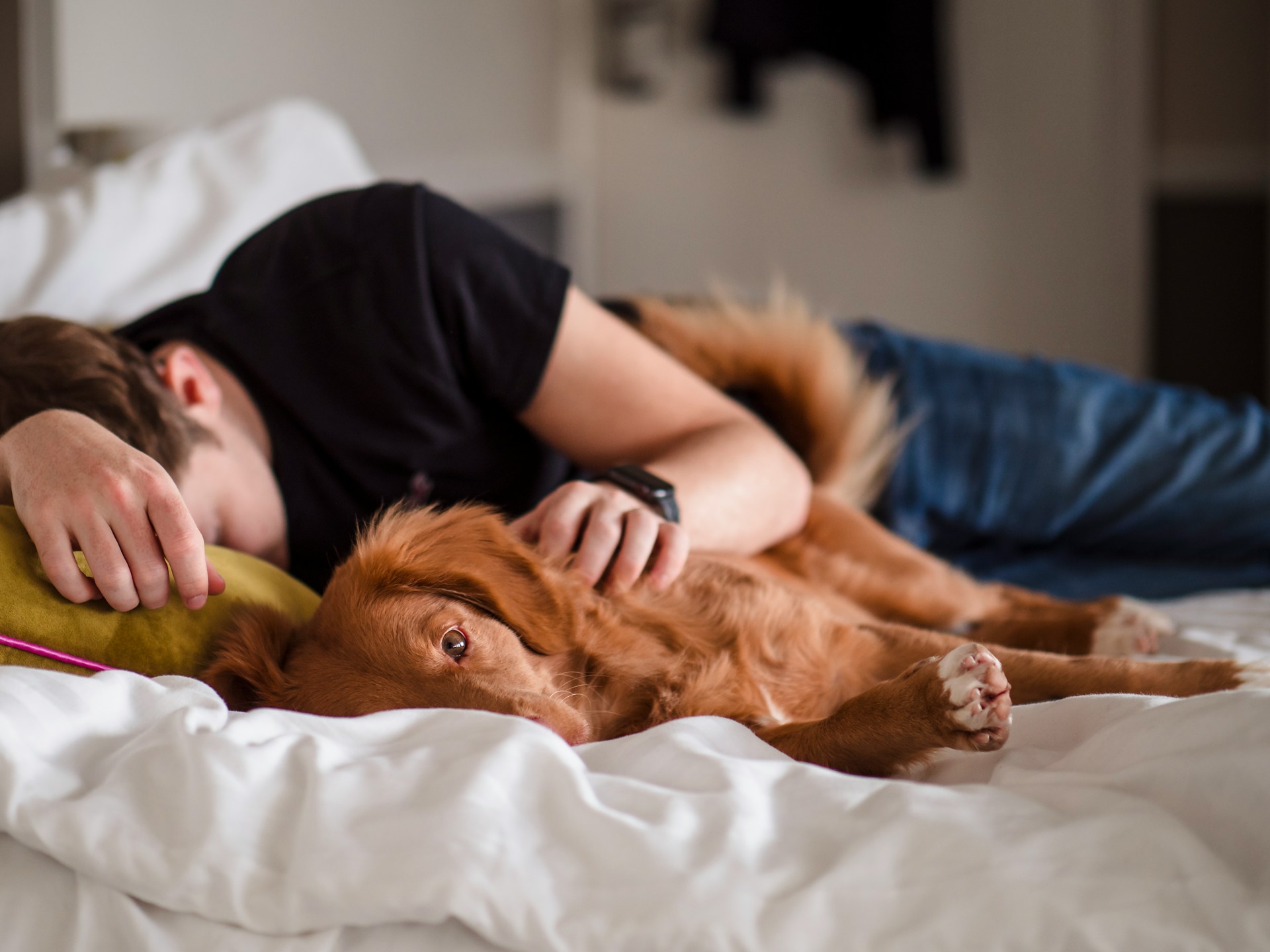
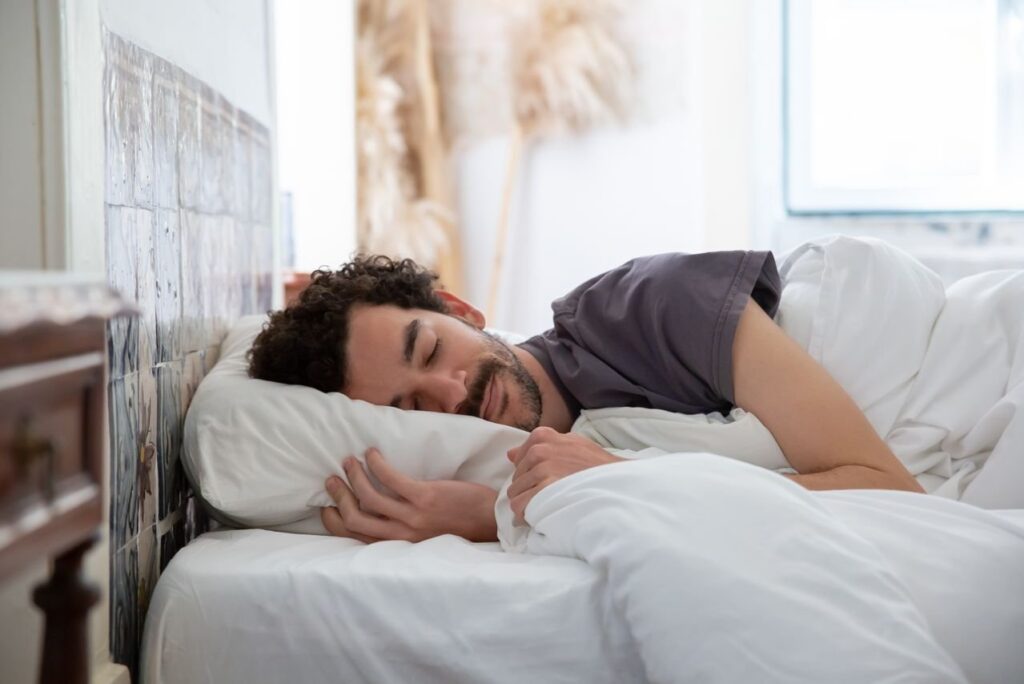
Sleep and testosterone influence each other in both directions. Poor sleep independently lowers testosterone, sometimes significantly, which means a real sleep problem can look like, or contribute to, low T. In the other direction, testosterone therapy itself can affect sleep, and in men with undiagnosed or untreated obstructive sleep apnea (OSA), TRT can make sleep-disordered breathing worse, particularly in the first weeks of treatment. This is exactly why OSA is considered a relative contraindication for TRT, and why sleep deserves real screening before starting treatment, not just a passing question about how well you sleep.
Fatigue is one of the most common reasons men seek out a hormone evaluation in the first place, and sleep often sits at the center of that conversation in a way that is easy to oversimplify. The relationship is not one-directional. Poor sleep can genuinely suppress testosterone. Low testosterone can genuinely disrupt sleep. And testosterone therapy itself can improve sleep for some men while making it measurably worse for others, depending on a factor that is rarely asked about clearly before treatment starts: whether undiagnosed sleep apnea is part of the picture. That distinction matters because treating the wrong problem first may leave the real cause completely untouched.
This guide walks through both directions of this relationship honestly, what sleep hygiene is worth ruling out before assuming a testosterone problem, and why sleep apnea screening belongs in every proper evaluation before TRT begins.
Direction One: How Poor Sleep Suppresses Testosterone
The evidence here is well established and genuinely striking. A landmark study restricted young, healthy men to five hours of sleep per night for just one week and found this alone reduced daytime testosterone levels by 10-15%, an effect roughly comparable to a decade of normal age-related decline compressed into seven days.1 Importantly, these participants were otherwise healthy young men with no underlying hormonal or medical conditions. The effect was produced by sleep restriction alone, which underscores just how directly sleep duration itself drives testosterone production, independent of any other factor. The majority of testosterone secretion happens during sleep, concentrated in the deep sleep phases of the first half of the night, which means chronically shortened or disrupted sleep directly interferes with the biological process that produces testosterone in the first place.
This matters clinically because a man who is sleeping five or six hours a night, or whose sleep is frequently interrupted, may show up with genuinely low testosterone on a lab panel that has little to do with his testes or his HPG axis, and everything to do with a correctable input his evaluation needs to account for.
Before You Assume It’s Low T: Sleep Hygiene Worth Ruling Out First
Given how directly sleep affects testosterone, basic sleep hygiene deserves a genuine look before assuming a hormonal cause, not as a dismissive “just sleep better” response, but as a legitimate, low-cost, low-risk first step that a responsible evaluation should actually consider.
- Consistency – going to bed and waking at roughly the same time daily, including weekends, supports the circadian rhythm that governs overnight hormone release. Sleeping nine hours on a Saturday does not reliably reverse the effect of five-hour weekday nights; the inconsistency itself, not just the average, appears to matter.
- Duration – targeting 7-9 hours of actual sleep, not just time spent in bed
- Light exposure – reducing screen and bright light exposure in the hour before bed, and getting natural light exposure earlier in the day, both help regulate the same circadian signals
- Temperature – a cooler bedroom (roughly 18-20°C / 65-68°F) supports the natural body temperature drop involved in falling and staying asleep
- Caffeine and alcohol timing – both can fragment sleep architecture even when they do not prevent falling asleep, particularly when consumed later in the day
- Nicotine – although often perceived as relaxing, nicotine is a stimulant that can reduce sleep quality and increase nighttime awakenings, worth noting given how many patients now use vaping products without necessarily connecting it to sleep quality
None of this replaces a proper medical evaluation if fatigue and other symptoms persist. But if these basics have not genuinely been addressed, it is worth doing so, or at least documenting that they have been tried, before attributing everything to a hormonal cause.5 Our guide on science-backed ways to boost testosterone naturally covers sleep alongside the other lifestyle factors that genuinely influence baseline hormone levels.
Direction Two: What TRT Actually Does to Sleep Once You Start
For many men, correcting a genuine testosterone deficiency improves sleep indirectly. Better mood, reduced fatigue, less nocturia in some men, and improved overall wellbeing may all contribute indirectly to better sleep quality. This is a real and commonly reported benefit, and our guide on what to expect during your first year of TRT covers the typical timeline for improvements like these.
But testosterone’s direct physiological effect on breathing during sleep is a separate, more complicated question, and this is where most consumer content on TRT stays too vague to be genuinely useful.
The Sleep Apnea Complication
Obstructive sleep apnea (OSA) is widely considered a relative contraindication for TRT, and the reasoning is specific rather than a vague, generalized caution.2 Current evidence suggests testosterone may blunt the brain’s ventilatory chemoreflex response, the mechanism that normally makes you breathe harder and wake briefly when oxygen levels drop and carbon dioxide rises during an apnea episode. With that reflex dampened, apnea episodes can become longer or more frequent rather than being interrupted as quickly.
The clinical picture here is also more time-dependent than most explanations acknowledge. A randomized, placebo-controlled trial found that testosterone therapy worsened sleep-disordered breathing at 6-7 weeks into treatment, but this effect was not present after 18 weeks, suggesting the risk may be concentrated in the earlier phase of treatment rather than persisting indefinitely.3 A separate review adds an important dosing nuance: short-term, high-dose testosterone appears more likely to worsen OSA, while long-term treatment at appropriate, lower physiological doses may eventually be associated with improvement in OSA symptoms rather than worsening.4
The relationship also runs in the other direction. Obesity and OSA both independently reduce testosterone levels, and low testosterone is itself an independent predictor of the physical and mental fatigue reported by men with OSA, creating a genuine feedback loop where each condition can worsen the other.2 Neither condition should automatically be assumed to be the starting point.
Identifying and treating OSA also matters for reasons that extend well beyond sleep or testosterone. Untreated OSA is already independently associated with hypertension, cardiovascular disease, insulin resistance, and reduced quality of life, including mood and cognitive effects that overlap significantly with the symptoms discussed in our guide on testosterone and mental health. Screening for it benefits far more than testosterone management alone, it is a genuine health finding in its own right.
Why Sleep Deserves Real Screening Before Starting TRT
Given all of the above, sleep should be assessed as more than a single yes-or-no question during a TRT evaluation. A responsible workup should ask specifically about snoring, witnessed pauses in breathing, morning headaches, and excessive daytime sleepiness, the classic warning signs of OSA, not just “how are you sleeping in general.” Men with these symptoms, or with known risk factors such as obesity, warrant a sleep apnea evaluation, and ideally treatment such as CPAP therapy, before or alongside starting TRT, rather than after a problem has already developed. Our guide on TRT side effects: separating facts from fear covers this alongside the other real, monitorable risks of treatment.
This is exactly the kind of question a general prescription-focused clinic is most likely to skip, and exactly the kind of question a proper hormone evaluation should never skip. Men who sleep alone may simply have no way of knowing whether they stop breathing during the night, since the classic warning sign, a partner noticing it, is not available to them. In these cases, modern sleep-tracking devices and formal overnight sleep studies can provide useful additional information, though a smartwatch is not a substitute for a proper diagnostic sleep study when OSA is genuinely suspected.
Practical Takeaway
- Before assuming low testosterone is the primary explanation for fatigue, honestly evaluate whether your sleep has been consistently adequate
- Address the fundamentals first: consistent sleep timing, sufficient duration, light exposure, bedroom temperature, and caffeine, alcohol, and nicotine timing
- If you snore heavily, have been told you stop breathing during sleep, or wake with headaches or excessive daytime sleepiness, raise this specifically before starting TRT, not after
- If you do have OSA, this does not automatically rule out TRT, it means monitoring needs to be more careful, particularly in the first several weeks, and treating the OSA itself (such as with CPAP) is part of doing this safely
- Improvements in energy and mood on TRT do not replace the need to screen for and treat OSA directly if it is present
Can Melatonin Affect Testosterone?
This is a commonly searched question, and worth addressing directly. Current evidence suggests that supplemental melatonin, at typical over-the-counter doses (generally in the 0.5-5 mg range), does not meaningfully suppress testosterone in healthy adults. This does not necessarily extend to the much higher doses some people take, sometimes 10, 20, or even 50 mg, well beyond what the research on this question has actually studied. Melatonin is primarily involved in regulating the sleep-wake cycle rather than directly driving testosterone production, and using a typical dose to help fall asleep is not something the current evidence suggests you need to worry about in terms of your hormone levels.
Frequently Asked Questions
Can bad sleep alone cause low testosterone on a blood test?
Yes. Research has shown that even one week of significant sleep restriction can lower testosterone by 10-15% in healthy young men. Chronic poor sleep can meaningfully affect testosterone levels independent of any underlying medical condition.
Can TRT improve sleep quality?
Yes, often indirectly. Many men report improved sleep once symptoms of hypogonadism, such as low mood, fatigue, and nocturia, improve on treatment. However, TRT is not a treatment for insomnia or obstructive sleep apnea themselves, and men with those specific conditions need them addressed directly rather than assuming TRT will resolve them.
Does TRT make sleep apnea worse for everyone?
Not necessarily for everyone, but it is a recognized risk, particularly in the first weeks of treatment and at higher doses. This is why OSA is considered a relative contraindication requiring careful evaluation and monitoring, not an absolute barrier to treatment for all men.
If I have sleep apnea, can I still get TRT?
Often yes, but responsibly managing OSA, ideally with CPAP therapy, alongside careful monitoring is part of doing this safely, rather than starting TRT while an OSA diagnosis is ignored or untreated.
Will fixing my sleep hygiene fix my low testosterone symptoms?
For some men whose low testosterone is primarily driven by chronic sleep deprivation, genuine improvements in sleep habits can meaningfully raise testosterone levels. This does not apply to every case, and a proper evaluation with lab work is still the way to determine whether an underlying hormonal issue exists beyond correctable sleep habits.
What sleep symptoms should I mention before starting TRT?
Snoring, witnessed pauses in breathing reported by a partner, morning headaches, and excessive daytime sleepiness are the classic warning signs of obstructive sleep apnea and should be raised directly during any hormone evaluation.
Does CPAP increase testosterone?
Not consistently. CPAP therapy improves sleep quality and overall cardiovascular and metabolic health, but studies looking specifically at testosterone levels after starting CPAP have found variable results, some men see improvement, others see little change. CPAP is still the correct treatment for OSA itself regardless of its effect on testosterone specifically.
Should I have a sleep study before starting TRT?
Not every man needs one. But men with loud snoring, witnessed apneas, obesity, morning headaches, or excessive daytime sleepiness should discuss a sleep evaluation with their physician before or alongside starting TRT, given how directly undiagnosed OSA can affect both safety and outcomes.
The Bottom Line
Poor sleep can contribute to low testosterone, low testosterone can contribute to poor sleep, and untreated sleep apnea can complicate both. Neither half of that relationship should be treated as an afterthought. The goal isn’t to decide which came first, it’s to identify and treat both when they’re contributing to the same symptoms.
At TRT Optima, sleep is part of the actual evaluation, not a box to check. If you want a full picture of what’s driving your symptoms, hormonal, sleep-related, or both, start with a free hormone evaluation – you only pay for lab testing, and the initial medical review is free.
Sources
- Leproult R, Van Cauter E. Effect of 1 week of sleep restriction on testosterone levels in young healthy men. JAMA. 2011.
- La Vignera S, Calogero AE, Cannarella R, Condorelli RA, Magagnini C, Aversa A. Obstructive Sleep Apnea and Testosterone Replacement Therapy. Androgens: Clinical Research and Therapeutics. 2020.
- Killick R, et al. The effects of testosterone on ventilatory responses in men with obstructive sleep apnea: a randomised, placebo-controlled trial. Journal of Sleep Research. 2013.
- The complex relation between obstructive sleep apnoea syndrome, hypogonadism and testosterone replacement therapy. 2023.
- Sleep Foundation. The Link Between Sleep and Testosterone.