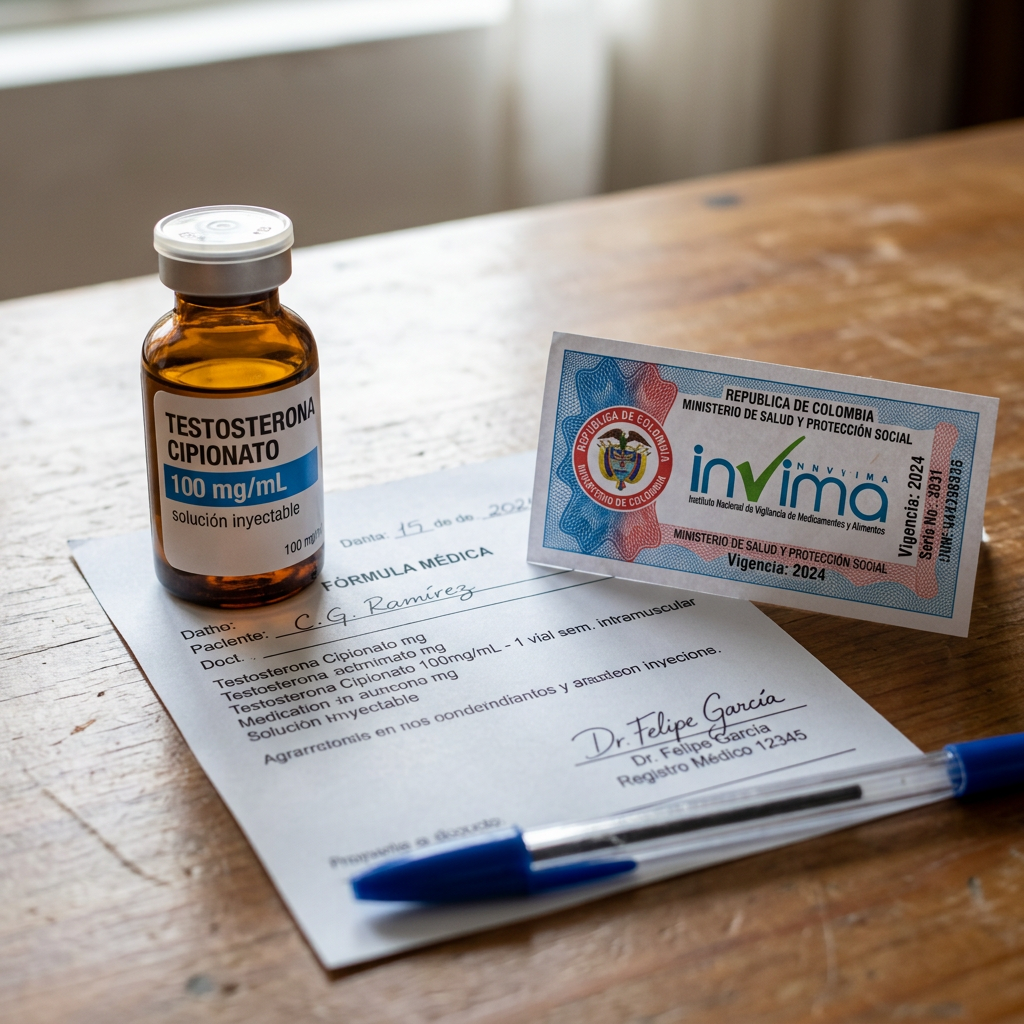

Quick answer: Testosterone Replacement Therapy (TRT) is a medically supervised treatment that restores testosterone to normal physiological levels in men diagnosed with hypogonadism, a condition confirmed by low testosterone on at least two separate morning blood tests, combined with clinical symptoms. It is not a supplement, not a performance-enhancing drug, and not an anti-aging product. It is a treatment for a specific, diagnosable medical condition, prescribed and monitored by a physician.
If you have started researching TRT, you have probably noticed the topic is surrounded by noise: forum threads full of bodybuilding jargon, wellness clinics promising vague “optimization,” and news headlines that swing between “miracle treatment” and “dangerous fad.” Very little of it actually explains, clearly and honestly, what TRT is.
This guide is that explanation. It covers what TRT actually is, who it is for, how the process works from first symptom to ongoing treatment, what the evidence says about safety, and where to go next depending on what you are trying to figure out.
What TRT Actually Is
Testosterone Replacement Therapy is the medical restoration of testosterone to the normal range a healthy adult male naturally produces, typically referenced as roughly 400-700 ng/dL, depending on the individual and clinical context. It is prescribed for a specific diagnosis: hypogonadism, a condition in which the body does not produce enough testosterone to maintain normal physiological function.
According to the Endocrine Society’s 2018 Clinical Practice Guidelines, a diagnosis of hypogonadism requires both consistently low testosterone on at least two separate morning blood tests and relevant clinical symptoms. Neither one alone is sufficient. A low number without symptoms is not automatically a diagnosis, and symptoms without confirmed lab values are not automatically hypogonadism either. This is the standard a responsible TRT program is built around.
What TRT Is Not
Most of the confusion around TRT comes from three things it gets mistaken for.
It is not anabolic steroid abuse. TRT restores testosterone to a normal physiological range. Bodybuilding-style steroid use involves deliberately pushing testosterone to supraphysiological levels, sometimes 5-10 times higher than a normal replacement dose, specifically to accelerate muscle growth beyond what the body would naturally support. These are different practices with different goals, different doses, and different risk profiles, even though they involve the same underlying hormone.
It is not a “testosterone booster” supplement. Over-the-counter supplements marketed as testosterone boosters are not the same category of intervention at all. TRT is a prescription medication that directly replaces testosterone. No legal supplement can replicate that effect in a man with a genuine deficiency. If you are trying to understand what actually can move the needle naturally, and what has a hard ceiling, our guide to science-backed ways to boost testosterone naturally covers that distinction directly.
It is not an anti-aging fad. Testosterone does decline with age, but TRT is not prescribed simply because someone is getting older. It is prescribed for a diagnosable medical condition. Our guide on whether it’s just aging or hypogonadism walks through this distinction in detail, including the biological mechanism behind the diagnosis.
Who TRT Is For, and Who It Isn’t For
TRT is appropriate for men who meet two conditions together: consistently low testosterone confirmed by blood work, and symptoms consistent with that deficiency. Common symptoms include persistent fatigue, reduced libido, loss of muscle mass, brain fog, low mood, and unexplained weight gain, though none of these are specific to low testosterone on their own. Our article on the 12 signs of low testosterone every man should recognize covers the full symptom picture and how it’s distinguished from other causes.
TRT is generally not appropriate when testosterone levels are within a healthy range for your age, when symptoms are better explained by another condition such as thyroid dysfunction or sleep apnea, or when you are actively trying to conceive without a fertility-preserving protocol in place, since standard TRT suppresses sperm production in most men. A responsible physician will tell you directly if you fall into one of these categories rather than prescribing anyway.
How TRT Works: The Basic Mechanism
Testosterone production is governed by a feedback loop called the hypothalamic-pituitary-gonadal (HPG) axis. The hypothalamus signals the pituitary gland, which releases luteinizing hormone (LH) and follicle-stimulating hormone (FSH), which in turn signal the testes to produce testosterone. When testosterone is deficient, either because the testes cannot respond to the signal (primary hypogonadism) or because the brain isn’t sending an adequate signal in the first place (secondary hypogonadism), TRT bypasses the broken part of this loop by supplying testosterone directly.
This is also why the specific type of hypogonadism matters for treatment planning, and why LH and FSH are measured alongside testosterone rather than testosterone being tested in isolation. Our guide on hypogonadism and the real science behind low T goes deeper into this mechanism and the primary-versus-secondary distinction.
The Diagnosis-to-Treatment Path, Step by Step
A responsible TRT process follows the same basic structure regardless of which clinic you use, though the quality of execution varies enormously between providers.
Step 1, Recognize the pattern. One symptom alone rarely indicates low testosterone. A cluster of physical, sexual, and cognitive symptoms together is what actually warrants testing.
Step 2, Get a comprehensive blood panel. Not just total testosterone. A proper evaluation includes free testosterone, SHBG, estradiol, LH, FSH, hematocrit, a lipid panel, and PSA, at minimum. Our guide on interpreting your testosterone labs explains what each marker means and why skipping any of them can mean missing the actual cause.
Step 3, Get a physician evaluation, not just a lab report. Numbers alone don’t diagnose anything. A physician needs to weigh your labs against your symptoms, history, and any other conditions that could explain what you’re feeling.
Step 4, Start treatment, if it’s appropriate. In Colombia, injectable testosterone (cypionate or enanthate) is the standard, cost-effective, and most predictable delivery method. Our guide on TRT injections, types, and what to expect covers exactly what starting treatment looks like, including what the first injection actually feels like.
Step 5, Ongoing monitoring. TRT is not a one-time prescription. Follow-up blood work every 3-6 months tracks hematocrit, estradiol, PSA, and testosterone levels to keep the protocol both effective and safe. Our guide on TRT side effects: separating facts from fear covers exactly what this monitoring is protecting against.
What the Evidence Actually Shows
Cardiovascular safety was, for years, the biggest open question in TRT. That question was substantially answered by the TRAVERSE trial, published in the New England Journal of Medicine in 2023, the largest randomized, placebo-controlled trial of TRT safety ever conducted. It enrolled over 5,200 men with pre-existing cardiovascular risk and confirmed hypogonadism, and found no increased incidence of major adverse cardiovascular events compared to placebo (hazard ratio 0.96, 95% CI 0.78-1.17).
That doesn’t mean TRT has zero risk. Real, manageable considerations exist, including elevated hematocrit, fertility suppression, and estradiol balance, all of which are exactly why ongoing monitoring is a core part of responsible treatment rather than an optional extra. Our full breakdown in TRT side effects: separating facts from fear covers each of these honestly, including what’s overstated and what genuinely deserves attention.
TRT vs. Natural Methods
Not everyone with low-normal symptoms needs medication. If your testosterone is low because of correctable factors, poor sleep, excess body fat, chronic stress, or heavy alcohol use, addressing those factors can produce a real, measurable improvement without a prescription. Our guide to 10 science-backed ways to boost testosterone naturally covers what genuinely works, sourced to the actual research.
But natural methods have a ceiling. They cannot resolve primary or secondary hypogonadism, significant age-related decline, or structural pituitary issues. Our guide on whether you actually need TRT or if natural methods will work lays out a practical framework for figuring out which situation you’re in before you spend months trying to fix something lifestyle changes were never going to fix.
Not sure where you stand?
A comprehensive hormone panel gives you real answers, not guesswork. You only pay for lab testing, and the initial medical review is free.
Schedule Your EvaluationIs TRT Legal? Is It Safe?
In Colombia, testosterone is a prescription-only medication regulated by INVIMA. It is not classified as a controlled substance, unlike in the United States, where it is Schedule III. That means access through a licensed Colombian physician is considerably more straightforward than in many other countries, though legal access and quality care are two different things, and the gap between them is exactly where most of the risk in TRT actually lives. Our complete guide on whether testosterone is legal in Colombia covers the full legal picture, including how to verify a product is properly registered.
On safety: the strongest available evidence, including the TRAVERSE trial referenced above, supports TRT as a safe, effective treatment for confirmed hypogonadism, provided it is properly monitored. The word “monitored” is doing real work in that sentence; unmonitored TRT, whether from an unlicensed source or a physician who doesn’t order proper follow-up labs, is where the real risk concentrates.
TRT in Colombia
Colombia has become one of the more practical places in the world to access properly diagnosed, properly monitored TRT, combining a clear legal framework, extensive certified laboratory networks, and pricing a fraction of equivalent private care in the US or UK. Bogotá and Medellín in particular have well-developed medical infrastructure and growing expat communities that TRT Optima serves directly. If you want city-specific detail, our guides to TRT in Bogotá and TRT in Medellín cover labs, pricing, and what to expect in each city.
Frequently Asked Questions
How long does TRT take to work?
Some men notice improvements in energy and libido within a few weeks. Body composition and strength changes typically take several months of consistent treatment to become measurable.
Is TRT for life?
For men with primary hypogonadism, where the testes themselves cannot produce adequate testosterone, treatment is usually long-term. For men with secondary hypogonadism caused by a reversible factor, such as obesity or sleep apnea, addressing the underlying cause can sometimes reduce or eliminate the need for ongoing treatment. This is determined case by case.
Does TRT affect fertility?
Yes. Standard TRT suppresses natural sperm production in most men, since the brain reduces the LH and FSH signals that stimulate the testes when it detects adequate testosterone from an external source. Men who want to preserve fertility have alternative options, including clomiphene citrate or hCG, which should be discussed with a physician before starting any treatment.
Can younger men get TRT?
Yes. While testosterone decline is more common after age 40, hypogonadism can affect men in their 20s and 30s due to genetics, obesity, prior anabolic steroid use, chronic illness, or other causes. The diagnostic standard is confirmed low testosterone and symptoms, not a specific age.
What does a comprehensive TRT evaluation actually include?
At minimum, total and free testosterone, SHBG, estradiol, LH, FSH, a complete blood count, a lipid panel, and PSA. A single total testosterone test is not sufficient for a proper diagnosis.
Is TRT safe long-term?
The evidence, including the TRAVERSE trial, supports long-term safety when TRT is properly monitored with regular blood work. The risks that do exist, such as elevated hematocrit or estradiol imbalance, are manageable when caught early through routine monitoring.
The Bottom Line
TRT is a well-studied, evidence-based medical treatment for a specific, diagnosable condition, not a supplement, not a shortcut, and not something that should be started or stopped without proper diagnostics. The question worth asking is never just “is TRT safe,” it’s “is TRT appropriate for me, based on my actual labs and symptoms, with a plan for ongoing monitoring.”
At TRT Optima, every evaluation starts with a comprehensive hormone panel and a physician review, not a prescription based on how you describe your symptoms. If you want to find out where you actually stand, schedule your free evaluation, you only pay for lab testing, and the initial medical review is free.