
Does TRT Cause Infertility? What Every Man Should Know Before Starting Testosterone
Does TRT cause infertility? Learn how testosterone affects sperm count, whether fertility returns, and how hCG, enclomiphene, and sperm banking may help.

Quick answer
TRT suppresses sperm production in most men, with studies showing severe reduction or complete suppression in roughly 65% to more than 90%, depending on the treatment regimen, duration, and study population. This can happen with injections, gels, patches, and pellets because the suppression comes from exogenous testosterone itself, not simply the delivery method. Fertility usually, but not always, returns after stopping TRT, and recovery may take months or occasionally years.
Imagine starting TRT because you are exhausted, your testosterone is genuinely low, and treatment finally helps you feel like yourself again. Then, several years later, you and your partner decide to have a child and discover that your sperm count is extremely low or even zero.
That scenario is more common than many men realize, and it is one of the most important conversations that should happen before testosterone replacement therapy begins.
Ask most men what they were told before starting TRT, and you will hear about energy, libido, body composition, mood, and muscle. Ask how many were told clearly and specifically that TRT would very likely reduce or eliminate sperm production, and the number drops sharply.
This is not a minor omission. It is one of the most consequential pieces of information a man can be missing before starting a treatment that may continue for years.
This article brings together what the published research shows about TRT and fertility: how common sperm suppression is, whether the delivery method matters, what happens after stopping, and which evidence-based options may help prevent or reverse the problem.
One number to remember: In a major World Health Organization contraceptive trial, weekly testosterone caused complete azoospermia in approximately 65% of previously fertile men within six months. In another large study, nearly all participants developed either azoospermia or severe oligospermia. These trials used testosterone as a contraceptive precisely because of its ability to suppress sperm production (WHO multicenter testosterone trial; review of male hormonal contraception trials).
Why This Conversation Often Does Not Happen
Most general practitioners prescribing TRT are not fertility specialists, and fertility may not be the first issue discussed when a patient presents with fatigue, low libido, poor concentration, or reduced strength.
Research examining physician prescribing practices has also identified persistent misconceptions about testosterone and male fertility. In one survey, approximately one-quarter of responding urologists reported having used testosterone in men seeking infertility treatment, despite its suppressive effect on spermatogenesis (McBride and Coward, 2016).
Exogenous testosterone does not treat male infertility. It can cause or worsen it by suppressing the hormonal signals that drive sperm production.
This is precisely the gap a responsible evaluation is supposed to close. Our guide on hypogonadism and the real science behind low T explains the hypothalamic-pituitary-gonadal axis in greater detail.
The short version is that external testosterone signals the hypothalamus and pituitary to reduce luteinizing hormone (LH) and follicle-stimulating hormone (FSH). LH helps stimulate testosterone production inside the testes, while FSH plays a central role in sperm production. When LH and FSH fall, intratesticular testosterone and spermatogenesis can fall with them (Recovery of spermatogenesis following TRT or anabolic steroid use).
How TRT Suppresses Sperm Production
Normal Hormonal Signaling
Hypothalamus and pituitary
↓
LH and FSH
↓
Testes
↓
Intratesticular testosterone and sperm production
What Happens on TRT
External testosterone enters the bloodstream
↓
The brain detects that circulating testosterone is sufficient
↓
LH and FSH decrease
↓
Intratesticular testosterone and sperm production may fall
This feedback mechanism explains why TRT can improve testosterone-related symptoms while simultaneously reducing fertility.
It is also important to distinguish circulating testosterone from intratesticular testosterone. A man can have normal or high testosterone in his blood while testosterone concentrations inside the testes have fallen substantially. Maintaining sufficient intratesticular testosterone is critical for normal spermatogenesis (Coviello et al., 2005).
How Common Is Fertility Suppression on TRT?
The effect is larger than many men assume, although the exact number varies depending on the testosterone formulation, dose, treatment duration, baseline fertility, ethnicity, and study population.
| Azoospermia during weekly testosterone-enanthate treatment | Approximately 65% within six months in a WHO multicenter contraceptive trial |
| Azoospermia or severe oligospermia in a second international trial | Approximately 98% achieved severe sperm suppression |
| Men who do not become completely azoospermic | A minority may retain measurable sperm, but often at severely reduced concentrations |
| Suppression with monthly injectable testosterone undecanoate | Approximately 95% of participants achieved azoospermia or severe oligospermia in a large Chinese contraceptive trial |
The first WHO study enrolled 271 healthy fertile men. Of those receiving weekly testosterone enanthate, 157 achieved azoospermia, representing a cumulative azoospermia rate of approximately 65% at six months (WHO Task Force, 1990).
A subsequent international study found that all but approximately 2% of participants achieved either azoospermia or severe oligospermia during testosterone treatment (Amory and Bremner review).
In a phase III study involving 1,045 healthy fertile Chinese men, monthly testosterone-undecanoate injections produced sufficient sperm suppression for entry into the contraceptive efficacy phase in approximately 95% of participants (Gu et al., 2009).
The takeaway is not that every man on TRT will become completely infertile. The takeaway is that the majority will experience a substantial decline in sperm production, and it is impossible to know in advance who will retain enough sperm to conceive without performing semen analysis.
Building a family-planning decision around the assumption that “I probably will not be affected” is not medically responsible.
✓
Not sure where you stand?
A comprehensive hormone panel gives you real answers, not guesswork. You only pay for lab testing, and the initial medical review is free.
Does the TRT Delivery Method Matter?
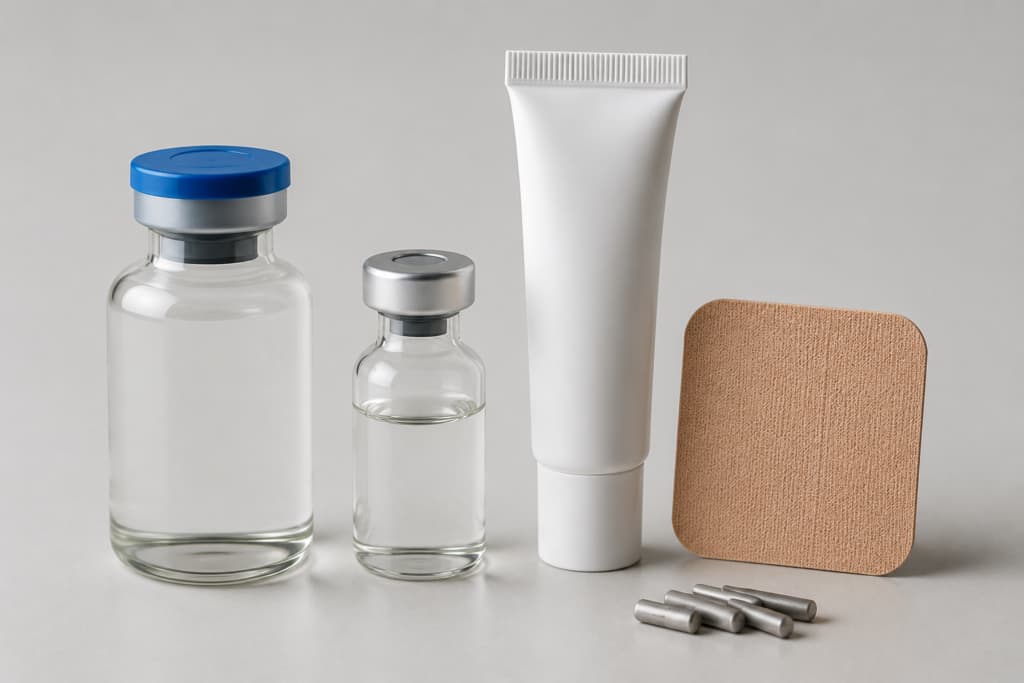
A common misconception is that a supposedly gentler delivery method, such as gel instead of injections, may be safer for fertility.
The evidence does not support relying on that assumption.
In a randomized trial comparing enclomiphene with topical testosterone gel, testosterone levels increased into the normal range in both groups. However, the testosterone-gel group experienced suppression of LH and FSH and a reduction in sperm concentration, while the enclomiphene group preserved sperm counts and increased gonadotropin signaling (Wiehle et al., 2014).
The mechanism explains why. Fertility suppression occurs because the brain detects exogenous testosterone in the bloodstream and reduces its own LH and FSH output. The HPG axis responds to circulating hormone exposure, not simply to whether the testosterone arrived through an injection, gel, patch, or pellet.
Different formulations may produce different testosterone peaks, troughs, and pharmacokinetic profiles, but any form of exogenous testosterone that adequately suppresses gonadotropins can reduce spermatogenesis.
Our guide on TRT injections, types, and frequency compares delivery methods for other clinical considerations, but from a fertility perspective, all forms of exogenous testosterone should be treated as potentially suppressive.
If You Stop TRT, Will Fertility Return?
The honest answer is that recovery is common, but not guaranteed, and it is not always fast.
Recovery depends on several factors, including:
- Age
- Duration of prior testosterone use
- Baseline sperm production
- Degree of hormonal and testicular suppression
- Underlying pituitary and testicular function
- Previous fertility problems
- Whether fertility-directed treatment is used
A pooled analysis of 30 hormonal male-contraception studies involving more than 1,500 men estimated that the probability of recovering to a sperm concentration of at least 20 million/mL was approximately:
- 67% within six months
- 90% within 12 months
- 96% within 16 months
- Nearly 100% within 24 months
These results are reassuring, but they came primarily from controlled contraceptive trials involving relatively healthy men and limited-duration hormone exposure. They should not automatically be applied to every older patient or every man who has used TRT or anabolic steroids for several years (Liu et al., 2006).
Men presenting with testosterone-associated infertility in clinical practice may recover more slowly. In one study of 66 men treated with testosterone cessation, high-dose hCG, and a selective estrogen receptor modulator, 70% achieved a total motile sperm count above five million within 12 months. Increasing age and longer testosterone exposure were both associated with slower recovery (Kohn et al., 2017).
The distinction matters: recovery is often achievable, but a man who has used TRT for years should not assume that his fertility will immediately return after his final injection.
Already Taking TRT? Do Not Panic
Discovering that TRT can suppress fertility does not mean a man should abruptly stop treatment or assume he can no longer have children.
The appropriate next step is to obtain real data and discuss the situation with a physician experienced in male hormones or reproductive medicine.
A typical evaluation may include:
- One or more semen analyses
- LH and FSH
- Total and free testosterone
- Estradiol
- Prolactin when clinically indicated
- Testicular examination or ultrasound when indicated
- A review of treatment dose, duration, and fertility timeline
A single semen analysis may not always tell the entire story because sperm concentration can vary between samples. A physician may recommend repeat testing depending on the initial result and the urgency of the fertility goal.
Do not stop TRT, start hCG, or begin a fertility medication without medical supervision. The best approach depends on whether the goal is preserving future fertility, attempting conception now, or recovering sperm production after prolonged suppression.
Preventing Suppression From the Start: hCG
This area of the research deserves particular attention because it reframes the issue from reactive treatment to proactive planning.
Human chorionic gonadotropin, or hCG, acts on the same testicular receptor as LH. It directly stimulates Leydig cells in the testes and may help maintain intratesticular testosterone while exogenous testosterone suppresses the brain's natural LH signal.
In a controlled study of healthy men whose gonadotropins were suppressed using testosterone, low-dose hCG maintained intratesticular testosterone in a dose-dependent manner. At an adequate hCG dose, intratesticular testosterone remained close to baseline despite substantial suppression of the men's natural LH and FSH (Coviello et al., 2005).
In a separate clinical series, 17 hypogonadal men received low-dose hCG while using TRT. Over a mean follow-up of approximately 8.6 months, none became azoospermic, and no significant decline in semen parameters was observed. Nine pregnancies were reported among couples attempting conception during follow-up (Hsieh et al., low-dose hCG clinical series).
This was a small retrospective study, so its findings should not be interpreted as proof that hCG guarantees preserved fertility in every man. However, combined with the intratesticular-testosterone research, it provides clinically meaningful evidence that proactive fertility planning may produce different outcomes from testosterone monotherapy.
hCG is not a universal solution, and it does not guarantee normal sperm production. Some men may still experience substantial suppression and may eventually require FSH-based treatment or specialist fertility care, particularly when actively attempting conception.
Recovering After TRT: What Treated Recovery Looks Like
For men who have already used TRT without fertility planning, physician-guided recovery treatment may improve the speed and extent of spermatogenic recovery compared with simply stopping and waiting.
Published treatment protocols have included hCG in combination with medications such as:
- Clomiphene citrate
- Tamoxifen
- Anastrozole in selected cases
- Recombinant or purified FSH
The appropriate combination depends on the patient's hormone levels, semen analysis, testosterone-use history, testicular function, and fertility goals.
In an early case series of men with testosterone-associated azoospermia or severe oligospermia, hCG-based combination therapy produced a mean initial sperm concentration of approximately 22 million/mL after an average of 4.6 months. Sperm returned to the ejaculate in nearly all treated men, although this was a small retrospective study without a control group (Wenker et al., 2015).
A newer retrospective cohort evaluated 77 men with previous testosterone use who received hCG plus FSH. Overall, 74% demonstrated improvement in sperm concentration during treatment (Stocks et al., 2024/2025).
Outcomes depended partly on the severity of sperm suppression at the start of treatment:
| Mild oligospermia, 5 to 15 million sperm/mL | 87.5% |
| Severe oligospermia, fewer than 5 million sperm/mL | 58.3% |
| Complete azoospermia, zero measurable sperm | 13.5% reached a normal concentration, although 64.9% experienced some measurable sperm recovery |
The pattern is clinically important: men who begin treatment with some remaining sperm production generally appear more likely to reach a normal sperm concentration than men starting from complete azoospermia.
This does not prove that every man should begin fertility medication before azoospermia develops. It does support obtaining semen testing early rather than assuming that fertility can always be addressed easily later.
One important limitation is that the evidence base is not uniform. Studies vary in their definitions of recovery, starting sperm counts, medication combinations, treatment duration, and patient populations. Some research also includes men with congenital hypogonadotropic hypogonadism, anabolic-steroid exposure, or pre-existing infertility rather than typical medically supervised TRT alone.
Pregnancy rates should also be interpreted separately from sperm recovery. Restoring measurable sperm does not guarantee natural conception because pregnancy depends on semen quality, female-partner factors, timing, age, and whether assisted reproduction is used.
Can Testosterone Be Continued During Fertility Treatment?
Traditionally, men with testosterone-associated infertility were generally instructed to stop exogenous testosterone before beginning fertility-recovery treatment.
Newer evidence has challenged the idea that cessation is always necessary in every case.
In the 77-man hCG and FSH cohort, 27 men continued testosterone while receiving fertility treatment and 50 did not. Approximately 74% of both groups demonstrated improved sperm concentrations, and concurrent testosterone use was not associated with a significantly worse recovery rate (Stocks et al.).
These findings are potentially important, especially for men who experience substantial symptoms when testosterone is stopped. However, this was a retrospective, single-center study and should not yet be treated as proof that continuing TRT is appropriate for everyone attempting conception.
Whether testosterone should be continued, reduced, or stopped remains an individualized medical decision based on semen parameters, fertility urgency, testicular function, symptoms, and specialist judgment.
Enclomiphene: An Alternative Before Starting TRT
For men who know in advance that fertility is a priority, enclomiphene citrate may be worth discussing with a physician before defaulting to TRT.
Enclomiphene is the trans-isomer of clomiphene citrate and acts as a selective estrogen receptor modulator. It works through a fundamentally different mechanism from exogenous testosterone.
Rather than supplying testosterone from outside the body, enclomiphene reduces estrogen-mediated negative feedback at the hypothalamus. This can increase the body's own LH and FSH production, which may stimulate the testes to produce more testosterone while preserving sperm production.
In a randomized clinical trial of men with secondary hypogonadism, enclomiphene increased testosterone to a degree similar to topical testosterone gel. However, LH and FSH increased with enclomiphene and sperm counts were preserved, whereas topical testosterone suppressed gonadotropins and reduced sperm concentration (Wiehle et al., 2014).
A systematic review and meta-analysis of randomized trials also found that selective estrogen receptor modulators increased total testosterone, LH, and FSH compared with placebo, supporting their ability to stimulate the endogenous hormonal axis rather than replace it (systematic review and meta-analysis of clomiphene and enclomiphene).
Major clinical guidance advises against prescribing exogenous testosterone to men who are actively trying to conceive because of its suppressive effect on spermatogenesis. Fertility-preserving medications may be considered in appropriately selected men under physician supervision.
Enclomiphene is not appropriate for every man with low testosterone. It generally requires a functioning hypothalamus, pituitary gland, and testes capable of responding to increased LH and FSH stimulation. It is therefore most relevant in selected cases of secondary hypogonadism.
It may be less effective when low testosterone results primarily from testicular failure, significant testicular damage, or another condition in which the testes cannot respond adequately to increased gonadotropin signaling.
Our guide on primary versus secondary hypogonadism explains why this distinction matters when choosing treatment.
Sperm Banking: A Practical Insurance Policy
For men who decide TRT remains the right choice despite the fertility tradeoff, or who are uncertain about future family plans, banking semen before starting treatment is a straightforward and well-established option.
Sperm banking does not prevent hormonal suppression and does not guarantee a future pregnancy. However, it provides a stored sample that may later be used for assisted reproductive procedures such as intrauterine insemination, in vitro fertilization, or intracytoplasmic sperm injection.
The number and quality of stored samples can affect which reproductive procedures are practical. For that reason, a fertility laboratory may recommend banking more than one sample, particularly when the initial semen analysis is abnormal.
Among all the options discussed in this article, sperm banking is the one that converts an uncertain future recovery outcome into a concrete backup plan.
So, Is TRT Worth the Fertility Risk?
For the right patient, TRT can still be worth it.
Testosterone replacement therapy can meaningfully improve symptoms in men with properly diagnosed hypogonadism, including low libido, reduced energy, loss of strength, poor body composition, and diminished quality of life. Fertility suppression does not erase those potential benefits, but it does need to be considered before treatment begins.
The real question is not whether TRT is universally “worth it.” The question is whether the expected benefits outweigh the risks for a particular patient, based on his diagnosis, symptoms, age, fertility plans, and available alternatives.
For a man with confirmed hypogonadism who has completed his family, does not want biological children, or has preserved sperm before treatment, fertility suppression may be an acceptable and manageable tradeoff.
For a younger man who wants children soon, has never had a semen analysis, or may be able to raise testosterone through a fertility-preserving treatment, immediately starting long-term exogenous testosterone may be a much less appropriate first step.
TRT becomes harder to justify when it is prescribed without confirming the diagnosis, investigating reversible causes of low testosterone, or asking whether future fertility matters. In that situation, the problem is not necessarily testosterone itself. The problem is beginning a potentially long-term treatment without a complete evaluation or informed discussion of the consequences.
A responsible decision should consider:
- Whether low testosterone has been confirmed with appropriate morning blood testing
- Whether symptoms are consistent with genuine hypogonadism
- Whether the cause is primary, secondary, or potentially reversible
- Whether biological children may be desired now or in the future
- Whether a baseline semen analysis or sperm banking is appropriate
- Whether fertility-preserving alternatives such as enclomiphene, clomiphene, or hCG may be suitable
- Whether the patient understands the need for ongoing monitoring and the possibility of prolonged fertility recovery
The goal should not be to frighten men away from TRT. It should be to make sure they understand the tradeoff and choose treatment with all of the relevant information available.
When TRT is medically indicated, carefully monitored, and selected after fertility goals have been discussed, it can be a reasonable and highly beneficial treatment. When it is prescribed casually, without proper diagnosis or family-planning considerations, the same treatment can create avoidable problems years later.
A Practical Decision Framework
The most appropriate next step depends on where you are in the treatment process and how important fertility is to your future plans.
- You have not started TRT, and fertility is a near-term priority: discuss enclomiphene, clomiphene, hCG, or another fertility-preserving approach with your physician, and consider sperm banking before beginning treatment.
- You have not started TRT, but want TRT specifically and fertility matters: discuss hCG co-administration and sperm banking before treatment rather than waiting to see whether suppression occurs.
- You are already on TRT, are not currently trying to conceive, but want to preserve the option: obtain a semen analysis and appropriate hormonal testing so decisions are based on actual data.
- You are already on TRT and actively trying to conceive: speak with a physician or reproductive-urology specialist about a structured recovery or fertility-support protocol.
- You are unsure whether you want children in the future: consider sperm banking before committing to long-term testosterone therapy.
Frequently Asked Questions
Does TRT always cause infertility?
No. However, TRT causes a substantial reduction in sperm production in most men. Some men become completely azoospermic, while others retain a small amount of sperm production.
The response varies between individuals and cannot be predicted reliably from testosterone levels, symptoms, testicular size, or treatment formulation alone. Semen analysis is the most direct way to determine what is actually happening.
Is testosterone gel safer for fertility than injections?
No form of exogenous testosterone should be considered fertility-safe.
Testosterone gels, injections, patches, and pellets can all suppress LH, FSH, intratesticular testosterone, and sperm production. A randomized trial directly showed that topical testosterone gel suppressed gonadotropins and sperm counts despite successfully increasing serum testosterone (Wiehle et al.).
If I stop TRT, will my fertility come back?
In many cases, yes, but recovery is not guaranteed and may take months or occasionally years.
Controlled contraceptive-trial data suggest that approximately 90% of men recover to at least 20 million sperm/mL within 12 months and nearly all recover within 24 months. However, those results may be more favorable than outcomes in older men or men with long-term TRT, anabolic-steroid exposure, or pre-existing fertility problems (Liu et al.).
What is hCG, and how may it help?
Human chorionic gonadotropin activates the same receptor in the testes as LH. It can stimulate testicular testosterone production even when the pituitary's natural LH output has been suppressed.
When used with TRT, hCG may help maintain intratesticular testosterone and reduce the degree of testicular and sperm suppression. When used after testosterone-associated infertility, it may be combined with a selective estrogen receptor modulator or FSH as part of a physician-guided recovery protocol.
Does hCG guarantee that I will remain fertile on TRT?
No. Small clinical studies are encouraging, but hCG does not guarantee normal sperm counts or pregnancy.
Men for whom fertility is important should still consider baseline and follow-up semen analysis, and sperm banking may be appropriate before treatment.
Is enclomiphene a replacement for TRT?
For selected men with secondary hypogonadism who prioritize fertility, enclomiphene may be an evidence-based alternative that raises endogenous testosterone without producing the same suppression of LH, FSH, and sperm production.
It is not appropriate for every type of hypogonadism. Suitability depends on the patient's LH, FSH, testosterone levels, symptoms, diagnosis, testicular function, and overall medical history.
Can I stay on TRT while trying to conceive?
Traditionally, stopping testosterone has been a central part of fertility-recovery treatment. Newer retrospective research suggests that some men may recover sperm production while continuing testosterone alongside hCG and FSH.
This remains an evolving area rather than settled practice. Continuing TRT while attempting fertility should only be considered under the supervision of a physician experienced in male reproductive medicine.
Should I bank sperm before starting TRT?
If preserving the option of biological children matters to you and there is any uncertainty about your future plans, banking semen before treatment is a sensible way to reduce the risk associated with unpredictable fertility suppression and recovery.
Should I stop TRT immediately if I am worried about fertility?
No. Do not abruptly stop treatment without speaking to your physician.
The appropriate next step is usually to obtain a semen analysis, review your hormone levels, clarify your fertility timeline, and then determine whether TRT should be continued, adjusted, stopped, or combined with fertility-directed treatment.
The Bottom Line
Fertility suppression on TRT is common, well documented, and usually, but not always, reversible.
That is not automatically a reason to avoid TRT when treatment is medically appropriate. It is a reason fertility should be discussed at the beginning of the evaluation rather than discovered years later when a man decides he wants children.
Evidence-based options exist, including hCG co-administration, enclomiphene for appropriately selected patients, fertility-directed recovery treatment, semen monitoring, and sperm banking.
Every one of these options is more useful when considered proactively rather than as reactive treatment after severe suppression has already occurred.
At TRT Optima, fertility plans are part of the initial conversation, not an afterthought. If you're evaluating TRT and want your fertility goals factored into the plan from day one, schedule your evaluation, you only pay for lab testing, and the initial medical review is free.
Sources and Further Reading
- World Health Organization Task Force on Methods for the Regulation of Male Fertility. Contraceptive efficacy of testosterone-induced azoospermia in normal men. The Lancet. 1990.
- Gu Y, et al. Multicenter Contraceptive Efficacy Trial of Injectable Testosterone Undecanoate in Chinese Men. The Journal of Clinical Endocrinology & Metabolism. 2009.
- Amory JK, Bremner WJ. Progress and prospects in male hormonal contraception. Current Opinion in Endocrinology, Diabetes and Obesity. 2008.
- McBride JA, Coward RM. Recovery of spermatogenesis following testosterone replacement therapy or anabolic-androgenic steroid use. Asian Journal of Andrology. 2016.
- Liu PY, et al. Rate, extent, and modifiers of spermatogenic recovery after hormonal male contraception: an integrated analysis. The Lancet. 2006.
- Kohn TP, et al. Age and duration of testosterone therapy predict time to return of sperm count after human chorionic gonadotropin therapy. Fertility and Sterility. 2017.
- Coviello AD, et al. Low-dose human chorionic gonadotropin maintains intratesticular testosterone in normal men with testosterone-induced gonadotropin suppression. The Journal of Clinical Endocrinology & Metabolism. 2005.
- Hsieh TC, et al. Low-dose human chorionic gonadotropin prevents azoospermia and maintains fertility in hypogonadal men on testosterone replacement therapy. Fertility and Sterility.
- Wenker EP, et al. The use of hCG-based combination therapy for recovery of spermatogenesis after testosterone use. The Journal of Sexual Medicine. 2015.
- Stocks BT, et al. Optimal restoration of spermatogenesis after testosterone therapy using human chorionic gonadotropin and follicle-stimulating hormone. Fertility and Sterility. 2024/2025.
- Wiehle RD, et al. Enclomiphene citrate stimulates testosterone production while preventing oligospermia: a randomized phase II clinical trial comparing topical testosterone. Fertility and Sterility. 2014.
- Clomiphene or enclomiphene citrate for the treatment of male hypogonadism: a systematic review and meta-analysis of randomized controlled trials.
Medical disclaimer: This article is for general educational purposes and does not replace an individualized medical evaluation. Fertility medications, testosterone, hCG, selective estrogen receptor modulators, aromatase inhibitors, and FSH should only be used under the supervision of a qualified physician.
This article is educational and does not replace professional medical advice. Diagnosis, prescriptions and treatment decisions are made by licensed physicians.