
Quick answer: Continuing or starting testosterone replacement Colombia as an expat is genuinely straightforward, but it requires a few deliberate steps most people never think about until they need them: bringing the right documentation, understanding that a foreign prescription cannot be filled directly at a Colombian pharmacy, being realistic about what your insurance will and will not cover, and choosing a provider built for international patients rather than a purely local practice.
You have just moved to Colombia. You have two injections left. Your prescription is from Canada. Your new pharmacy will not accept it, your insurance company is no help on the phone, and you have no idea whether you are about to start the entire diagnostic process over again from zero.
If that scenario sounds uncomfortably familiar, you are not alone. This is one of the most common situations expats run into, and almost none of it is actually as difficult to solve as it feels in the moment. This guide covers what genuinely matters for TRT Colombia for foreigners: what to bring before you ever leave home, how foreign prescriptions interact with Colombian pharmacies, whether you can legally bring testosterone into the country, what your insurance realistically covers, and what continuity of care actually looks like whether you are relocating permanently or just passing through.
Already on TRT and Just Visiting? Read This Section First
Most people reading this are not relocating permanently. Many are simply visiting Colombia, for work, an extended trip, or as part of the broader medical tourism trend, while already established on a working protocol elsewhere. If that is you, your situation is genuinely simpler than the full relocation scenario below, and it is worth addressing first.
Your need is narrow: avoid running out, avoid a gap in continuity, and avoid having to explain your full medical history from scratch on a tight timeline. This does not require rebuilding your care plan from the ground up. The same underlying framework applies, existing records plus a physician’s review, but it moves considerably faster when the goal is continuing an established, working protocol rather than a first-time diagnosis. If this describes you, the most efficient path is reaching out directly with your current protocol details rather than trying to navigate it independently.
The Real Problem Most Expats Face
The legal and logistical basics of accessing TRT in Colombia are already well covered elsewhere. What is missing from most of that conversation is the specific friction that only shows up once you are actually living between two systems: a lab panel from your home country that a new doctor has never seen, a prescription that means nothing at a Colombian pharmacy counter, expat healthcare Colombia insurance that quietly excludes the one treatment you actually need monitored, and the very real possibility of needing care again the next time you relocate. None of this is insurmountable. All of it is avoidable with a small amount of preparation done before you need it, rather than during a moment of urgency.
Can I Bring Testosterone Into Colombia?
This is one of the most commonly searched questions on this entire topic, and the short answer is: generally yes, for personal use, with the right documentation. Travelers and expats may typically carry a reasonable personal-use supply of prescription testosterone, along with the original prescription, pharmacy receipt or dispensing label, and ideally a physician letter confirming active treatment. Keep medication in its original packaging rather than repackaged or unlabeled containers.
This is a simplified summary. Our complete guide on whether testosterone is legal in Colombia covers the full legal framework, including what happens with larger quantities, how this differs from your home country’s rules on bringing medication back, and how testosterone prescription Colombia requirements work once you are here long-term.
Not sure where you stand?
A comprehensive hormone panel gives you real answers, not guesswork. You only pay for lab testing, and the initial medical review is free.
Schedule Your EvaluationBefore You Leave Home: Your Checklist
A small amount of preparation before you travel makes the entire process faster once you arrive. Bring:
- Your latest lab results (total and free testosterone, estradiol, SHBG, LH, FSH, hematocrit, and any lipid or liver panels)
- Your current prescription
- A brief letter from your doctor confirming your diagnosis and treatment history, if you can get one
- Your medication boxes or packaging, not just loose vials
- A written summary of your current dosing schedule, including medication, dose, and injection frequency
- Any relevant previous imaging, if applicable to your specific case
Not everything needs to be formally translated or apostilled. A working summary in plain language, even a clear photo of your last few lab results, is usually more useful in practice than a fully certified but hard-to-parse document.
What Medical Records Actually Matter
Beyond the checklist above, a few specific things are worth understanding about why each item matters. Recent lab results, generally within about three months, give a new physician useful context on your baseline and trend over time, even if fresh labs end up being ordered anyway. A summary of your current protocol, specific medication, dose, and frequency, is arguably the single most useful document you can bring, since it lets a physician understand your history without reconstructing it from memory. A brief physician letter adds credibility and speeds up the review process, though it is not strictly required. For a full breakdown of what a comprehensive hormone panel should include if new labs are needed locally, our guide on interpreting testosterone labs covers every marker in detail.
Foreign Prescriptions and Colombian Pharmacies
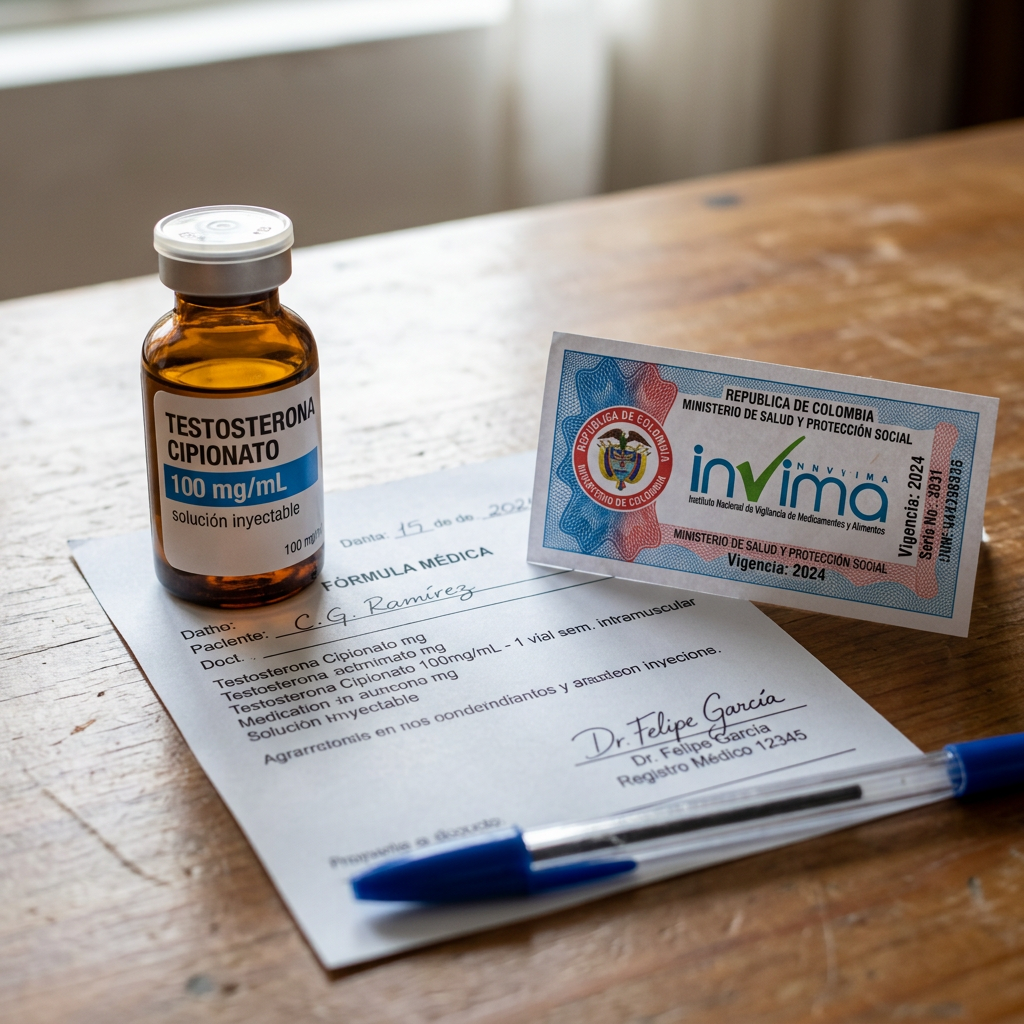
Here is the detail that surprises the most people: a prescription written by a physician in the United States, United Kingdom, Canada, or elsewhere is not valid at a Colombian pharmacy on its own, regardless of how official it looks. Colombian pharmacies require a fórmula médica issued by a licensed Colombian physician, full stop.
The practical path forward is straightforward in concept: a Colombian physician reviews your existing labs, protocol summary, and history, and issues a new, valid Colombian prescription based on that review, rather than requiring you to restart the full diagnostic process from zero. This is exactly the coordination that matters most for an English speaking TRT doctor Colombia relationship, since it is the difference between a quick continuation of established, working care and an unnecessary delay while a new evaluation gets built from scratch.
Insurance: What’s Realistic and What Isn’t
Most international and expat health insurance plans treat hormone therapy inconsistently at best. Many exclude it outright as an “elective” or “lifestyle” treatment, regardless of whether your case is a legitimate, lab-confirmed medical diagnosis. The same gap frequently extends to the lab monitoring that comes with responsible TRT: even plans that cover general bloodwork often specifically exclude labs tied to a treatment the policy has already classified as elective, meaning the monitoring itself, not just the medication, can fall outside coverage.
One detail worth knowing: some international insurers will still reimburse a portion of your expenses after the fact if you submit receipts, even when they will not pay a provider directly. This is easy to miss, and it is worth checking your specific policy’s out-of-network reimbursement terms rather than assuming a lack of direct billing means no coverage at all.
In practice, the coverage gap matters far less in Colombia than it would in the US or UK, because underlying costs are low enough that private pay is genuinely workable rather than a financial burden. A comprehensive hormone panel in Colombia typically costs a small fraction of the same panel in the United States, and monthly medication costs are similarly modest. For many expats, paying out of pocket for quarterly labs in Colombia costs less than a single co-pay would have cost back home. See our pricing page for full transparency on current costs.
Continuity When You Travel or Relocate Again
Expats move. Contracts end, family circumstances change, and plans shift. A provider relationship built for international patients should be able to travel with you, at least in terms of maintaining your records and treatment history, even if the physical logistics of labs and pharmacy access change with your location.
For carrying medication across borders again later, the same personal-use guidelines covered above and in our legal guide apply, and your home country’s own import rules apply once you land there, which is worth checking independently rather than assuming Colombian legality carries over automatically. Maintaining a single continuous provider relationship, rather than restarting with a new local doctor every time your location changes, is what actually prevents gaps in care, like missed follow-up labs or unmonitored hematocrit.
Why Most Local Clinics Aren’t Built for This
A general practice clinic, in Colombia or anywhere else, is built around a local patient base with a stable address and a single insurance or payment relationship. Expats and frequent travelers are, almost by definition, outside that model: different language needs, an existing treatment history from another country, and a genuine possibility of relocating again within a year or two. Most clinics simply are not equipped to coordinate around that reality, which is exactly why so much of this friction falls on the patient to solve independently.
Our guides to TRT in Bogotá and TRT Medellín expats resources, including our Medellín guide, cover the city-specific practicalities of labs and pharmacies in more detail, but the deeper issue for expats specifically is coordination across time and geography, not just knowing which lab to walk into.
Designed for International Patients
Our team is fully bilingual, meaning your entire evaluation, from the initial conversation through lab review to ongoing follow-up, can happen in English from start to finish, without translation gaps or the risk of a nuance getting lost between you and your physician. We coordinate the right lab panels at partner laboratories, review existing records from anywhere in the world as a starting point rather than requiring you to start from zero, and maintain a continuous relationship with your case rather than treating each visit as an isolated appointment.
Whether you are relocating to Colombia long-term, splitting time between two countries, or visiting briefly while already established on a working protocol elsewhere, the goal is the same: continuity of care that travels with you, instead of a fresh start every time your location changes.
Why Many International Patients End Up Choosing TRT Optima
After understanding how the process works, most international patients are looking for the same thing: a provider who can make it straightforward, without unnecessary delays, language barriers, or having to start from scratch every time they move.
At TRT Optima, that’s exactly how our process is designed.
We begin by reviewing the records you already have whenever possible, rather than asking you to repeat years of testing simply because you’ve changed countries. If additional bloodwork is needed, we coordinate it through trusted partner laboratories, and one of our physicians reviews everything together before making recommendations.
From there, your care continues with the same team. Your lab history, treatment decisions, protocol adjustments, and physician notes remain in one place, making future follow-ups far simpler whether you’re living in Medellín, Bogotá, splitting your time between countries, or returning to Colombia months later.
Everything can be handled in English or Spanish, and we believe pricing should be transparent from the beginning. You’ll know what your laboratory testing costs, what ongoing care costs, and what to expect before making any decisions.
Most importantly, we don’t believe everyone with symptoms needs TRT.
If your laboratory results don’t support a diagnosis of hypogonadism, we’ll tell you. If another approach is more appropriate, we’ll discuss that instead. Long-term hormone therapy is an important medical decision, and it should begin only when the diagnosis and expected benefits genuinely justify it.
Our goal isn’t simply to prescribe testosterone.
It’s to become the healthcare team you can rely on wherever life takes you next.
For international patients, good TRT isn’t just about writing a prescription. It’s about making sure your care remains consistent even when your address doesn’t.
Frequently Asked Questions
Can I use my prescription from my home country at a Colombian pharmacy?
No. Colombian pharmacies require a fórmula médica from a licensed Colombian physician. A foreign prescription is useful as supporting documentation for a Colombian physician’s review, but is not directly valid at the pharmacy counter.
Can I fly with testosterone?
Generally yes, for a reasonable personal-use supply, carried with your original prescription, pharmacy documentation, and the medication in its original packaging. Rules can vary by airline and by the countries on your specific itinerary, so it is worth checking both your departure and destination country’s requirements in advance.
Can I bring syringes with my medication?
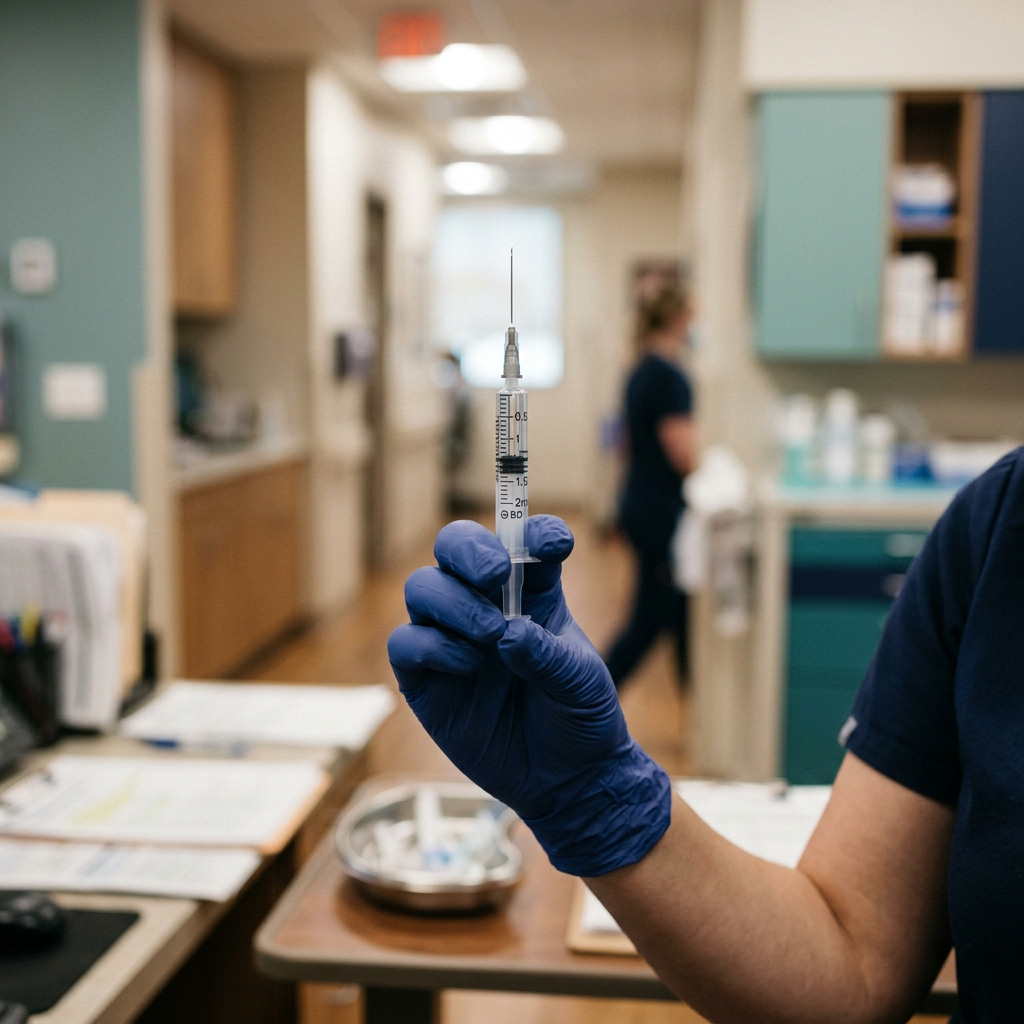
Yes, syringes for personal medical use accompanying a legitimate prescription are generally permitted when traveling, though airline-specific carry-on and checked baggage rules for sharps can vary, so checking your specific airline’s policy beforehand is worthwhile.
Can I refill my prescription before returning home?
This depends on your home country’s specific import and prescription rules, which are separate from Colombia’s requirements and are your responsibility to understand before traveling back. Colombian-issued medication may not transfer smoothly across every border, particularly in countries with stricter controlled-substance import rules for testosterone.
Will my international health insurance cover TRT in Colombia?
Often only partially, or not at all, since many expat and international plans classify hormone therapy as elective. Some insurers will still reimburse a portion of costs after you submit receipts, even without direct provider billing, so it is worth checking your policy’s specific terms. Given how affordable private-pay care is in Colombia, this is usually a manageable gap rather than a barrier.
What if I’m only in Colombia for a short trip and already on TRT?
This is a narrower, more straightforward situation than relocating, focused on maintaining continuity of an already-established protocol rather than a new evaluation. Reaching out directly with your current protocol details is the most efficient starting point.
The Bottom Line
For most expats, continuing TRT in Colombia is much easier than they expect. The biggest mistakes happen before they ever arrive, not because the healthcare system here is difficult, but because they did not bring the information a new physician needs to safely continue their treatment. Our guide on what TRT is and how it works is a good starting point if you are new to the topic entirely.
At TRT Optima, continuity for international patients is built into how we work from the start. Start with a Free Hormone Evaluation – you only pay for lab testing, and the initial medical review is free.